The
Morning
Brief
Wednesday, July 15, 2026
Today's Signal
Today's content circles a central tension: AI is rapidly expanding what's achievable in creative and knowledge work, but the structural questions—who controls the workflow, how humans oversee agents, and what happens to junior workers when entry-level tasks get automated—are outpacing our ability to answer them. Across tools, models, and organizational strategy, the recurring insight is that raw capability matters less than the architecture around it: the harnesses, the loops, the task graphs, the governance. For design and creative practitioners especially, the shift isn't just about new tools—it's about whether the systems and workflows they build become the durable moat.
Deep Read

AI Agents Don't Just Speed Up Work — They Restructure What Work Is
Jakob Nielsen's UX Roundup
New research comparing autonomous agent workflows to manual execution finds that the real transformation isn't speed—it's the fundamental shift from doing to overseeing. Tasks that took 269 minutes now complete in 36, but humans aren't freed to rest; they're freed to supervise at greater scope and ambition. This reframes the designer's role not as diminished but as elevated to a different cognitive layer entirely—one with profound implications for how teams, workflows, and creative responsibility get organized.
In the Feed

Beyond General-Purpose AI: Why Custom Harnesses Are the Real Design Systems Moment
Lenny's Newsletter
Wrapping AI agents in specialized harnesses—encoding permissions, routing to the right tools, enforcing consistent outputs—is the agentic equivalent of building a design system: the real leverage isn't the component, it's the governance layer around it. This framing makes custom harness architecture directly legible to anyone who's led a design systems practice.
The Entry-Level Job Signal That Should Concern Every Design Leader
Platformer
Early-career roles are shrinking 2.7 percent while mid-career roles grow, suggesting AI is beginning to automate the junior work that has historically been the pipeline for developing senior talent. For design teams, this raises an urgent structural question: if AI handles the execution-layer work that trains junior designers, where does the next generation of craft expertise come from?
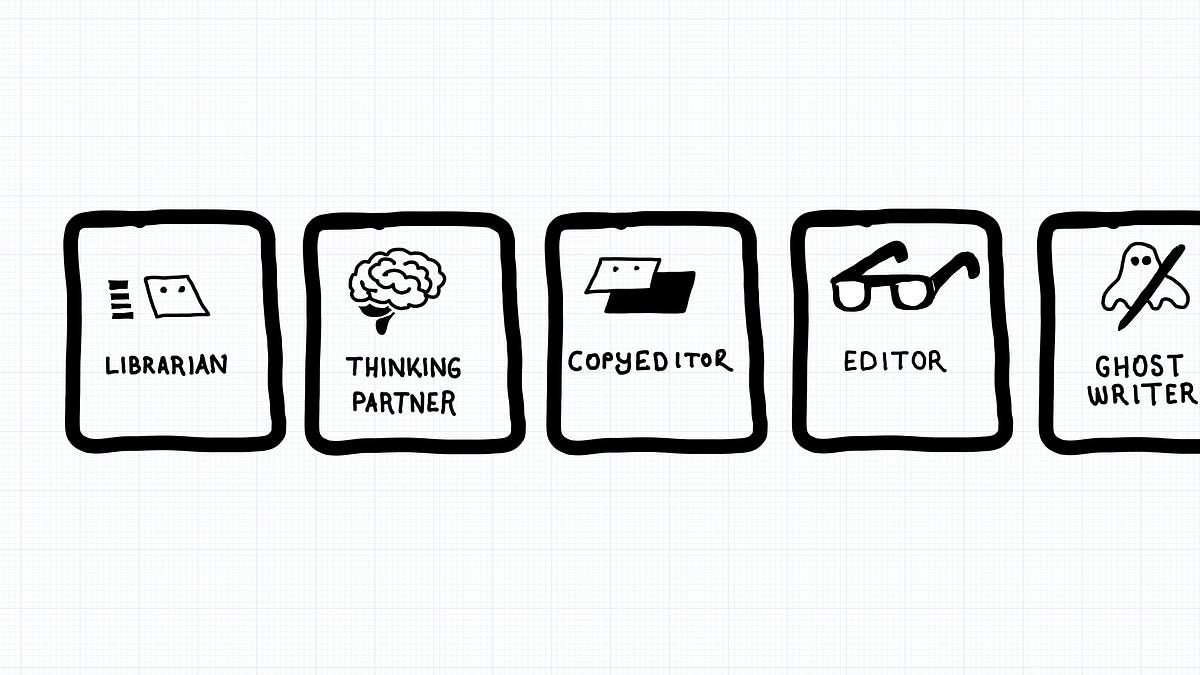
A Creative Commons Model for AI Disclosure — Normalizing Collaboration Over Confession
Design Meets AI
A proposal to treat AI as a named contributor rather than a compliance checkbox reframes disclosure as craft transparency rather than audit. Using composable icons inspired by Creative Commons licensing, the 'Made With' toolkit signals creative provenance upstream—a model with direct resonance for design teams navigating how to credit AI tooling in their own output.
Quick Takes
Architectural efficiency beats raw scale: an 8B model outperforming GPT-4 on agent benchmarks via smarter task decomposition is the clearest argument yet that workflow design—not model size—is the real competitive lever.
AlphaSignalClaude behaving measurably differently across model versions and languages—and Anthropic admitting they don't know why—is a quiet but significant governance problem for any team building consistent product experiences on top of these models.
AlphaSignalThe productivity-tools expert's verdict on AI is the most useful corrective in the pool: AI handles clear busywork well and judgment calls poorly, so the organizations winning with it are those who've mapped exactly which tasks are which.
Platformer →The gap between organizations buying AI and organizations extracting value from it comes down to a single missing artifact: a strategy for where the freed time actually goes—which sounds like a design problem as much as a leadership one.
Business Insider →