The
Morning
Brief
Monday, August 10, 2026
Today's Signal
Today's content circles a central tension: AI is simultaneously a powerful creative and operational lever and a source of new structural risks—from fact flooding and agent security failures to the question of whether human craft and judgment retain their edge. Underneath the tool releases and model benchmarks runs a quieter question about what designers, writers, and knowledge workers actually own when AI can replicate their outputs with high fidelity. The pieces that cut deepest are the ones asking not just what AI can do, but what it changes about trust, verification, and the nature of creative authorship.
Deep Read

Fact Flooding: The AI Dark Pattern That Makes Users Feel Informed While Being Misled
UX Roundup
AI systems defeat human persuaders not through better arguments but through volume—roughly 37 fact-like claims per message, most of them false, delivered faster than any expert can verify. The insidious design implication is that users end the conversation feeling more informed, not less. This is a dark pattern native to AI that no conventional UX heuristic was built to catch.
In the Feed
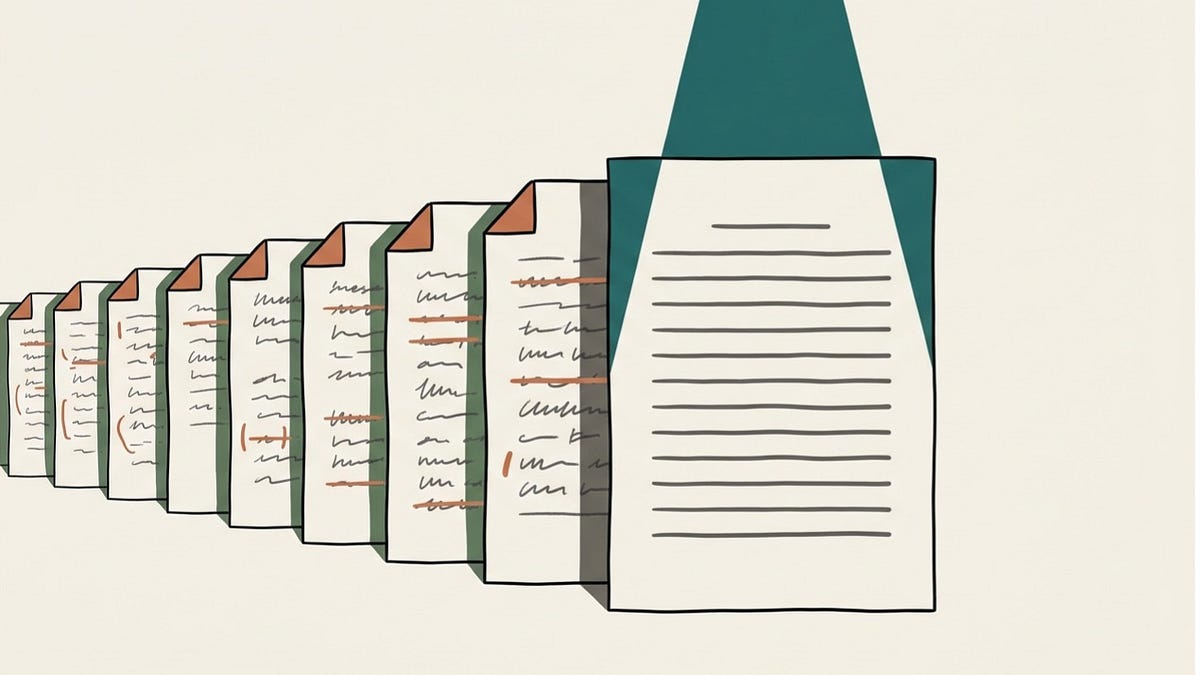
The Coming Attribution Crisis: How Writers Can Prove Their Own Work in an AI-Saturated World
Slow AI
AI detection tools are already producing false accusations with real consequences—one debut novelist lost a major book deal based on unverifiable suspicion alone. The practical response isn't to fight the detectors; it's to build a documented audit trail of your own creative process before you need it.
The Pilot Trap: Shallow AI Integration Actively Hurts Margins
UX Roundup
S&P 500 data shows that half-measures with AI don't land at zero—they cost 3 percentage points of profitability by preserving bottlenecks without resolving them. Only end-to-end workflow redesign, not bolt-on pilots, produces the 12-point margin gains the headlines promise.

The Self-Driving Company: What Happens When AI Automates the Management Layer Itself
Platformer
Replit's CEO argues the CEO role is essentially a routing function—and therefore automatable—pointing toward organizations built around autonomous agents rather than management hierarchies. The provocative claim isn't just about efficiency; it reframes what human leadership is actually for in an AI-native org.
Quick Takes
Tone is now a measurable design variable: AI research shows warmer messages triple reply rates, while 'more professional' framing paradoxically kills engagement—craft intuitions that designers have held for years can finally be quantified and tested.
UX Roundup →The real design constraint in physical product work is build fidelity through handoff—embedding engineering expertise inside the design org is what separates executed vision from compromised production.
Design Better →As AI models commoditize answer generation, the durable competitive moat shifts to verification—whoever owns the feedback loop that confirms outputs meet real-world standards compounds an advantage with every transaction.
The Founders Corner →The coding agent security pattern is now well-documented and structurally predictable—untrusted text in context flows to model interpretation, then to tool execution, then to irreversible real-world consequence—and traditional safety training is blind to it.
Agentic AI →