The
Morning
Brief
Monday, June 1, 2026
Today's Signal
Today's content circles a central tension: AI is rapidly expanding what's possible in creative and technical work, but the subjective experience of that work—its meaning, authenticity, and craft—is being quietly eroded in the process. Simultaneously, the infrastructure of AI itself is maturing from single-agent tools into coordinated multi-agent systems, with direct implications for how design and knowledge work gets structured and governed.
Deep Read

The Hidden Cost of AI Assistance: Better Output, Diminished Experience
Slow AI
Research on generative AI in creative writing surfaces a troubling tradeoff: AI measurably improves output quality while simultaneously reducing the creator's subjective sense of authorship and creative satisfaction. Crucially, transparency about AI involvement partially restores that sense of creative value—suggesting that how we frame AI's role in our work matters as much as the work itself. For designers navigating AI-augmented workflows, this is the design systems problem hiding in plain sight: the pipeline can be optimized while the practitioner hollows out.
In the Feed

Where Value Actually Accrues as AI Commoditizes Software
Lenny's Newsletter
As software becomes easier to build, distribution and proprietary data emerge as the durable moats—not the code itself. The analysis also draws a useful distinction between automatable tasks and transformable jobs, a frame directly relevant to how design teams should be thinking about role evolution rather than role replacement.
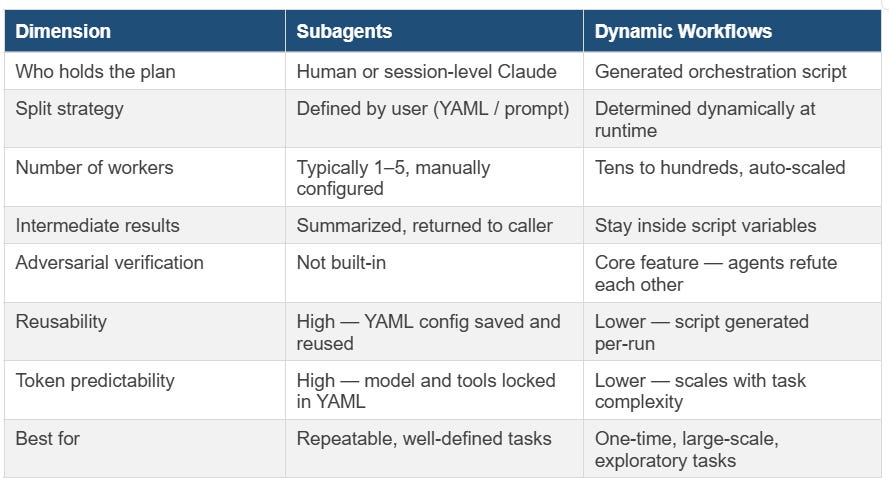
Multi-Agent Architecture as the New Design System: Orchestration Primitives for AI Teams
Agentic AI
Claude Code's three collaboration primitives—Dynamic Workflows, Subagents, and Agent Teams—reframe AI from a single tool into a structured execution architecture, with decisions about which primitive to use mirroring design system decisions about component granularity and composition. The shift from sequential prompting to parallel, adversarially-verified agent coordination has direct structural implications for design-to-code pipelines.
Agents Don't Use Your UI — and That's a Design Systems Crisis
The Founders Corner
AI agents increasingly bypass human-facing interfaces entirely, interacting directly with underlying APIs—which means UI layers that aren't backed by clean, well-governed system architecture become structurally irrelevant. Design systems built for human navigation may need to be reconceived as API-legible component contracts.
Quick Takes
AI-generated writing's 'uncanny polish' is now a liability signal—authenticity has become a scarce asset precisely because synthetic fluency is ubiquitous, a dynamic design communicators should take seriously.
The Founders Corner →Uber's finding that rising AI token consumption no longer correlates with better outcomes is a warning shot for any team measuring AI adoption by usage volume rather than work quality.
The Founders Corner →The chatbot-to-agent convergence isn't just a product shift—it's a UX paradigm collapse, as the interface for computing moves from navigation to delegation.
Big Technology →Higher-income, expertise-based roles now face greater AI exposure than lower-wage ones—the specialization that once made design leadership defensible is exactly what makes it machine-readable.
The Founders Corner →