The
Morning
Brief
Wednesday, June 3, 2026
Today's Signal
The design profession isn't being displaced by AI — it's being restructured around it. Designers are now shipping code, building tools, and operating as full-stack practitioners, while AI platforms race to close the loop between creative intent and working product. Underneath the tooling shifts, a more fundamental question persists: as AI handles execution, what does craft, judgment, and design leadership actually mean?
Deep Read
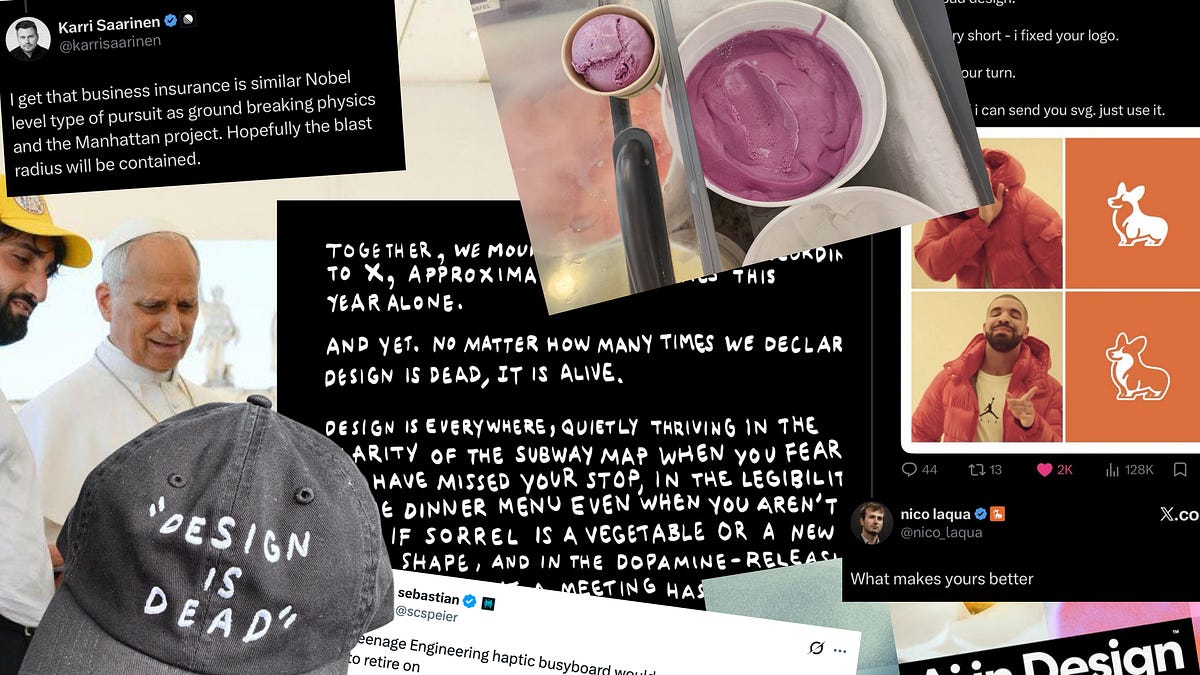
Design Isn't Dead — It's Being Rebuilt Around the People Who Stayed
The Extremely Online Report
Panic about AI killing design tools missed the real story: Figma posted 46% revenue growth and near-perfect retention while shipping its own on-canvas agent, and 91% of designers are now using AI weekly — half have shipped AI-generated code to production. The discipline isn't disappearing; it's rapidly bifurcating between designers who treat AI as an execution layer and those who use it to redefine what the role can be. The more interesting design question isn't survival, it's what design leadership looks like when making is no longer the bottleneck.
In the Feed
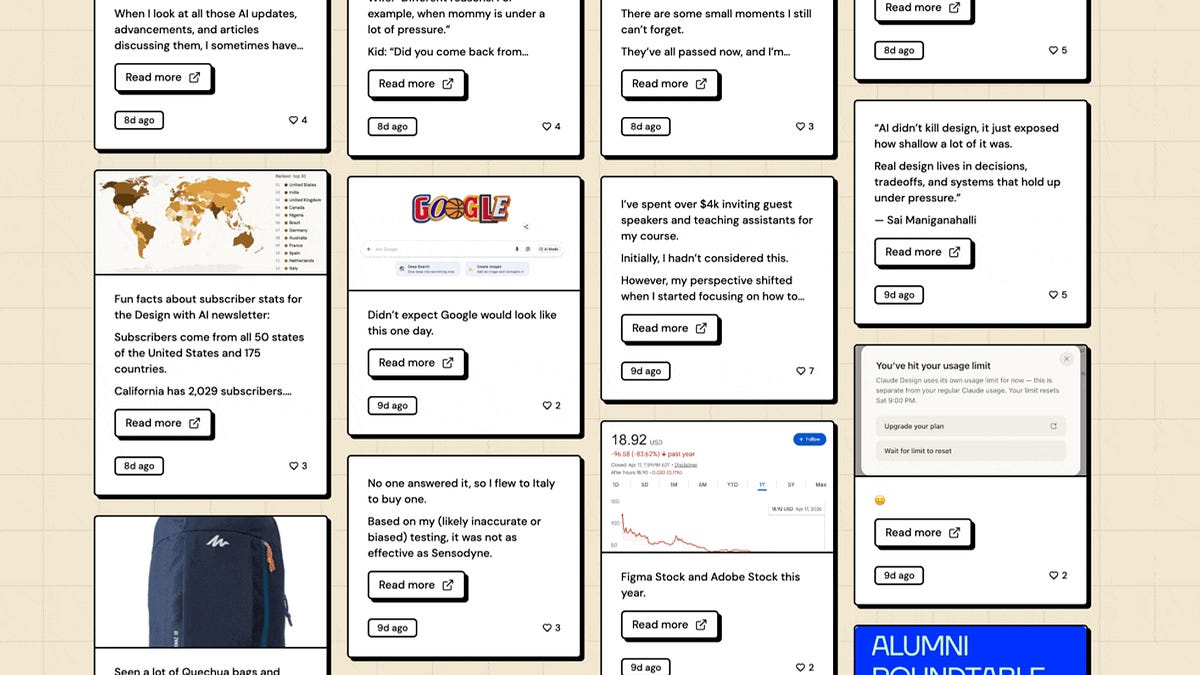
A Designer Builds a Full Production Site With Claude Code — and Documents Every Decision
Design with AI
This end-to-end walkthrough of building a searchable content site with Claude Code is a rare, honest account of what AI-assisted development actually looks like in practice — including accessibility fixes, visual style iteration via Git branches, and real deployment errors. It's a concrete proof point for how design systems thinking translates into agentic workflows.
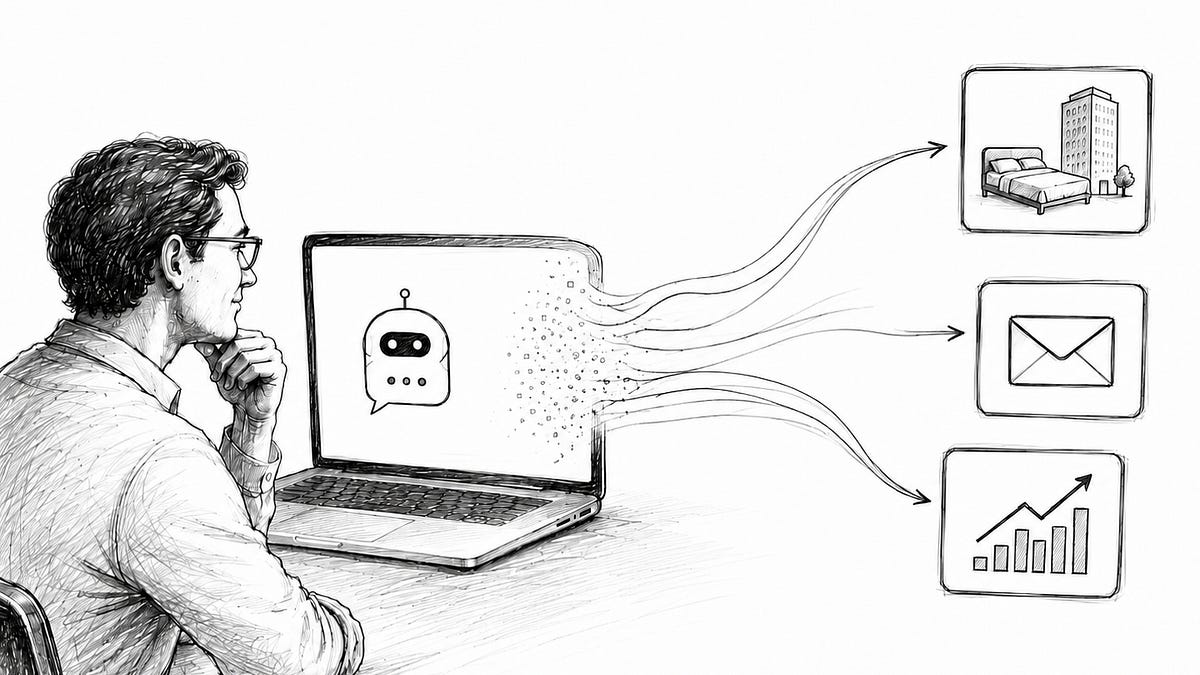
The Chatbot/Agent Merger Is the Next Platform Shift Designers Need to Prepare For
Big Technology
As chatbots evolve into action-taking agents — booking, buying, managing — the interaction paradigm shifts from conversation to orchestration, and the design surface gets far more complex. The products that emerge from this merger will need entirely new frameworks for trust, transparency, and control.
Live Commenting on AI-Generated HTML Closes a Critical Feedback Loop
AlphaSignal
A small but significant tool: an open-source Claude Code skill that lets users annotate directly on Claude-generated HTML pages and watch edits happen in real time. It's an early signal of what collaborative design-to-code review could look like when the designer and the builder are the same agent.
Quick Takes
Sam Altman walking back his own job-disruption timeline is a useful reminder that capability and adoption velocity are completely different curves — and designers building strategy around hype timelines will miscalibrate.
The Founders Corner →Anthropic crossing $965B valuation while filing to go public means the AI platform bets designers are making today are increasingly bets on publicly accountable infrastructure — the stakes of tool lock-in just got higher.
Big TechnologyThe resistance among Gen Z students to AI adoption — even when backed by legitimate cognitive-offloading research — illustrates the same tension playing out in design teams: principled skepticism without an engagement strategy cedes the policy space to whoever shows up.
Slow AI →Agentic coding workflows are quietly collapsing the gap between design intent and shipped product — Cursor's auto-review mode and Claude Opus 4.8's parallel subagents are infrastructure moves that change what a solo designer can realistically own end-to-end.
AlphaSignal