The
Morning
Brief
Tuesday, June 9, 2026
Today's Signal
AI is compressing the distance between design intent and shipped code, with tools like Cursor's Design Mode and browser-based refinement workflows making the designer-developer boundary increasingly negotiable. Simultaneously, the structural economics of AI are clarifying: compute is becoming a larger budget line than labor, moats built on friction are dissolving, and the real bottleneck is no longer output but quality validation and demonstrable value delivery.
Deep Read
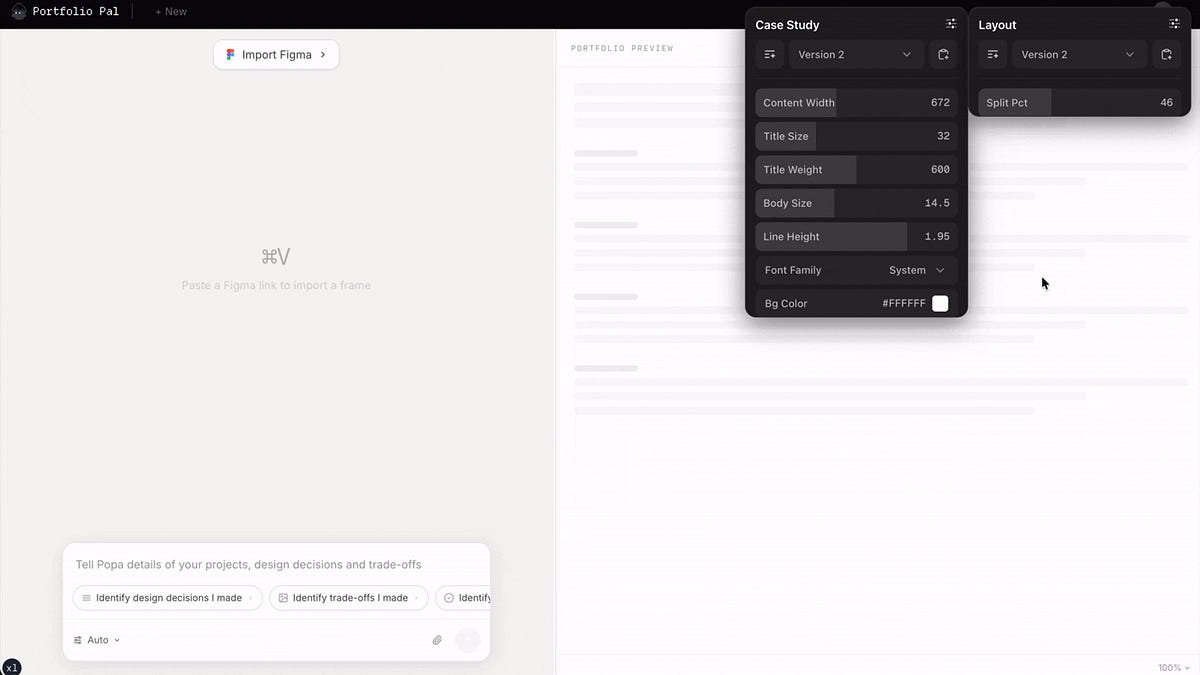
The Browser Is Now the Design Surface: How In-Code Refinement Is Rewriting the Design Process
AI-Native Designers Garden
A new phase of the design workflow has emerged where the browser—not Figma—is where visual refinement actually happens, with AI coding agents translating annotated feedback directly into source-code changes. Three open-source tools have carved out distinct roles in this layer: one for pointing and commenting on live interfaces, one for tuning parameters, and one for visually editing with agent assistance. This isn't just a tooling shift—it signals that the Figma-to-code pipeline is inverting, with code becoming the design artifact and visual tools becoming the annotation layer on top of it.
In the Feed
Cursor Solves AI Coding's Core UX Problem: Pointing at the Thing You Actually Mean
AlphaSignal
Cursor's updated Design Mode lets users click, multi-select, draw on screen, and use voice to precisely identify UI elements before requesting changes—eliminating the ambiguity that makes text-only AI coding prompts so frustrating for visual work. This is a meaningful step toward AI tools that understand design intent spatially, not just syntactically.

AI Interaction Design Is Restoring the Lean-Forward Web—and Why That Matters for Designers
Jakob Nielsen
After years of attention-extracting social interfaces, AI interaction design is returning agency to users by letting them specify outcomes rather than navigate prescribed steps. For designers, this reframes the craft challenge: less about controlling the path, more about defining the boundaries of what AI can do on a user's behalf.
AI Tripled Code Output—Now QA Is the Constraint That Matters
The Founders Corner
Commit volume nearly tripled in 2026, but incident rates per pull request climbed with it, shifting the real bottleneck from generation to validation. The insight is transferable to any AI-accelerated creative workflow: when production capacity surges, the quality gate becomes the strategic chokepoint.
Quick Takes
Google's on-device 290ms image edit model is a signal that AI creative tools are about to get dramatically faster and cheaper—with inference moving off the cloud and onto the device in your hands.
AlphaSignalWhen Anthropic's own Claude now authors 80% of their production codebase and handles 12-hour autonomous tasks, the question for design systems teams is no longer 'should we use AI for code generation' but 'what do we govern when AI is the primary author?'
AlphaSignalThe CNN vs. Perplexity lawsuit crystallizes the foundational tension in AI's business model: the creative and journalistic work that makes these systems valuable was produced by people who were neither asked nor compensated.
Slow AI →AI is eroding moats built purely on switching costs and integration complexity—the defensibility that remains belongs to teams with unique data, embedded workflow context, and infrastructure that can't be replicated by a better prompt.
The Founders Corner →