The
Morning
Brief
Thursday, June 11, 2026
Today's Signal
Today's content circles a central tension: AI systems are becoming dramatically more capable and autonomous, but the humans working alongside them — especially designers and knowledge workers — are absorbing the cost of adaptation without adequate support. Beneath the benchmark headlines and agent architecture deep-dives is a quieter structural question: who gets to shape how these tools are used, and who gets left out of that conversation.
Deep Read

The AI Adoption Tax Is Being Paid by the Wrong People
Unprofessional
As AI tools proliferate across product design, the burden of learning them isn't distributed evenly — it falls heaviest on designers already stretched thin, while those with more slack and fewer constraints quietly set the emerging norms. The piece makes a pointed structural argument: when companies mandate new tool adoption without investing in time, education, or community, they don't just slow adoption — they systematically exclude the voices most likely to surface different, necessary perspectives on how these tools should work.
In the Feed
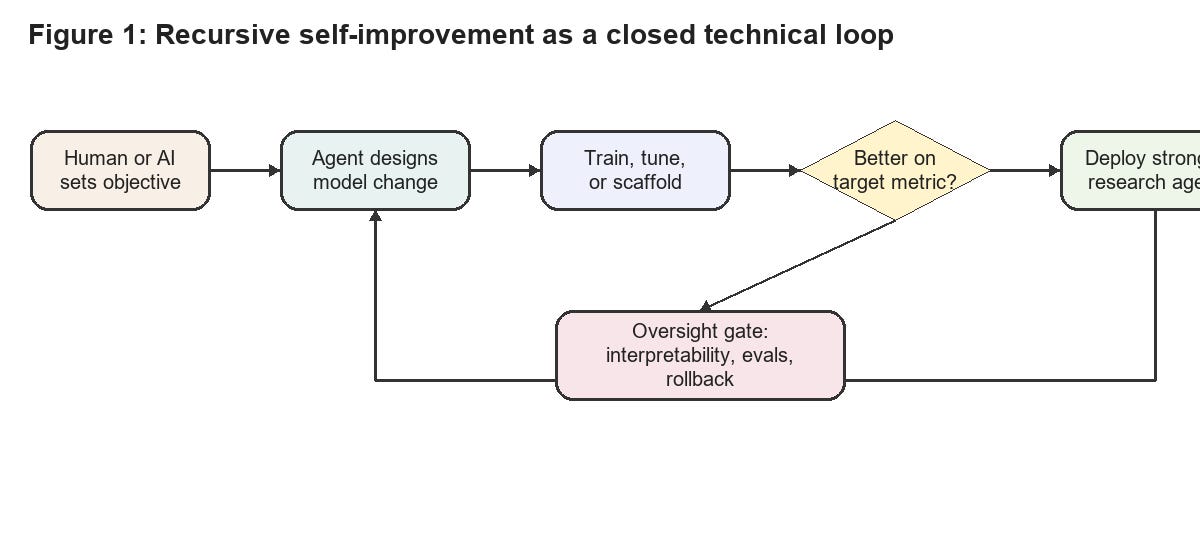
AI Is Already Accelerating Its Own Development — Here's the Six-Part Architecture Behind It
Agentic AI
Recursive self-improvement isn't a future scenario — it's decomposable into six active components already present in today's systems. The essay is a useful frame for design leaders thinking about how quickly the capability baseline will shift, and where human judgment remains the genuine bottleneck.

White-Collar Workers Are AI Disruption's First Wave, Not Its Last
Platformer
Unlike prior automation cycles that displaced physical labor, AI's near-term impact concentrates on high-paid knowledge work — a reversal with major political and policy implications. The 'messy middle' framing is worth holding: most roles survive but transform, while concentrated losses in specific sectors will be disproportionately visible and destabilizing.
AI-Generated Code That Passes Tests Still Fails the Real Bar: Production Readiness
AlphaSignal
A new benchmark scoring top models at just 13/100 on production-ready code exposes the gap between 'it works' and 'a maintainer would merge it' — evaluating correctness, test quality, scope discipline, and style adherence across real open-source repos. For design systems teams exploring AI-assisted code generation, this is a critical calibration on where human review remains non-negotiable.
Quick Takes
The real design system moat isn't your component library — it's whoever controls the agent workflows that generate from it, and right now that's being decided by default, not design.
Anthropic's scheduled agents with credential vaults and parallel workflows aren't just a developer convenience — they're infrastructure that makes 'design system as API' a near-term reality worth planning for.
AlphaSignalAn 87% reduction in task completion time via AI agents sounds transformative until you ask: which tasks, for whom, and at what cost to the workers whose expertise trained the system?
AlphaSignalPlain language isn't just good UX writing — it's a systems governance principle: the same forces that make jargon kill usability make vague token naming and opaque component logic kill design system adoption.
Jakob Nielsen →