The
Morning
Brief
Friday, June 26, 2026
Today's Signal
Today's content circles a single underlying tension: AI is accelerating faster than the institutions, workflows, and consent frameworks built around it. From compute as competitive weapon to opt-out-by-default data harvesting to the gap between AI adoption speed and verification practices, the throughline is that the people and systems meant to govern AI are perpetually a step behind the technology itself.
Deep Read
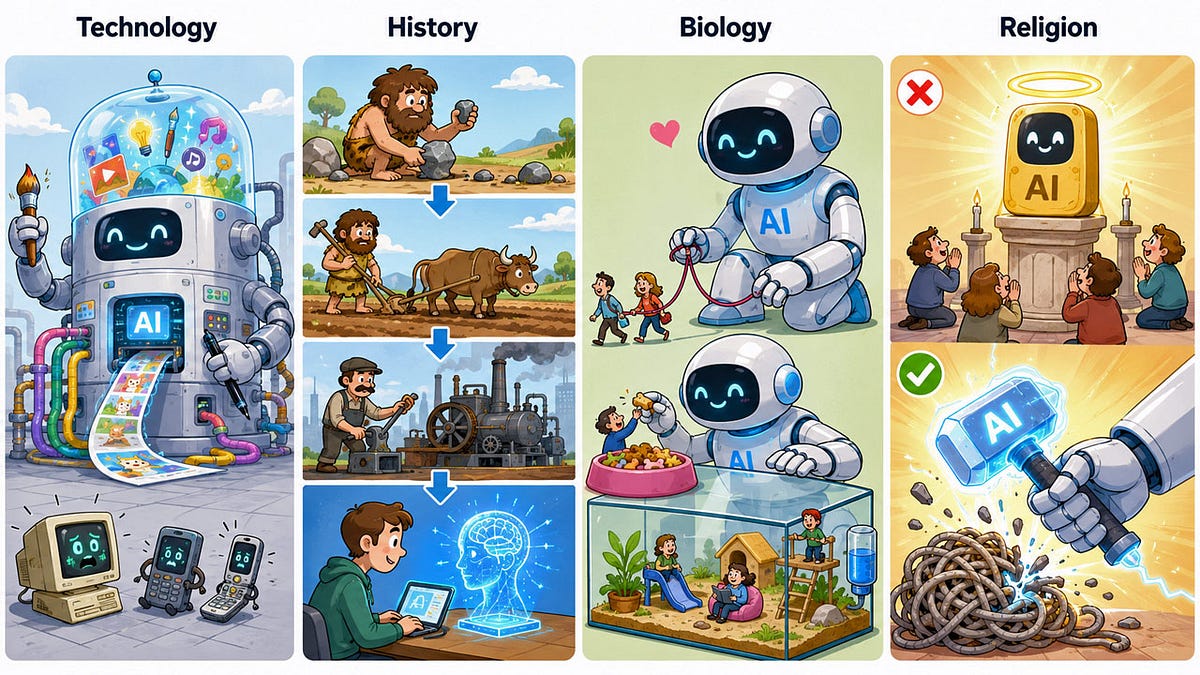
No Single Analogy Can Hold AI — Here's Why That Matters for How You Plan Around It
Jakob Nielsen
A rigorous attempt to triangulate AI's scale using four distinct frameworks — the internet, human economic history, biology, and mythology — arrives at a sobering conclusion: AI will likely exceed the internet's economic impact by an order of magnitude, but the right mental model depends entirely on your time horizon. For designers and technologists making near-term decisions, the internet analogy holds; for structural career and business strategy, human economic history is the more useful lens. The piece is a useful corrective to both hype and dismissal.
In the Feed

Opt-Out by Design: How Silence Became Consent for AI Training
Slow AI
Major platforms have quietly redefined consent — your data trains their AI models unless you find and flip the buried switch. The structural pattern is worth understanding not just as a user, but as a designer who ships consent flows.
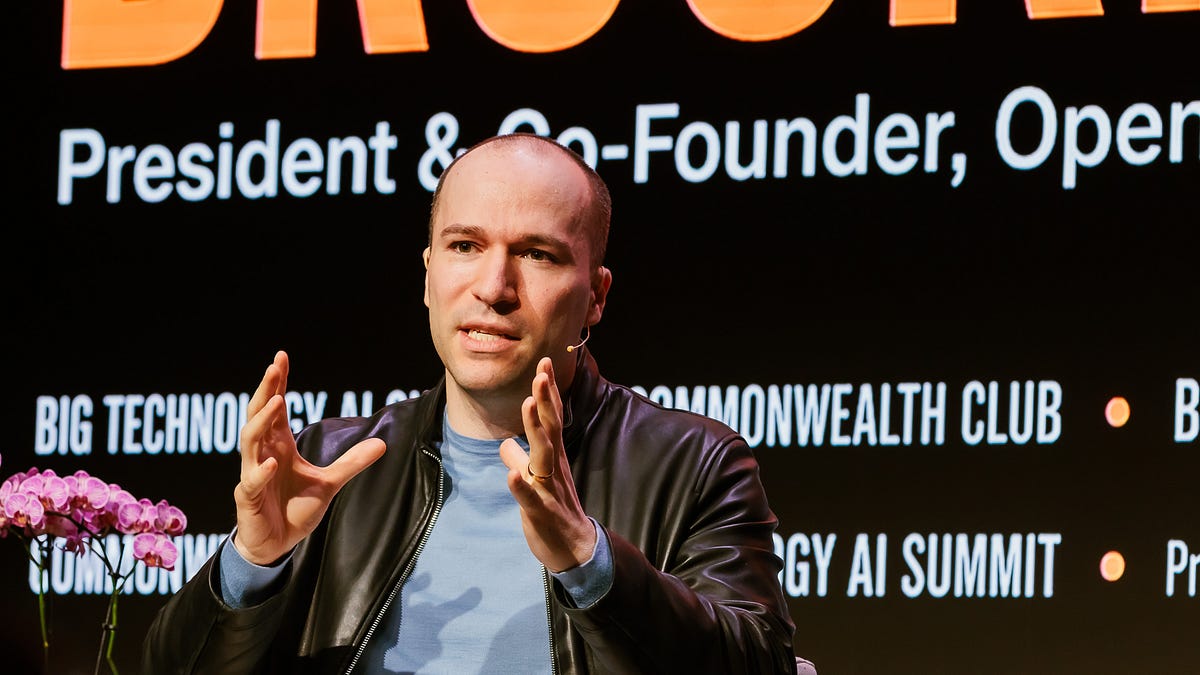
Compute Is the New Moat: OpenAI's Bet That Raw Infrastructure Wins the AI Race
Big Technology
With frontier model capabilities converging across labs, the argument that whoever controls the most compute ultimately wins carries real weight — and a $122B datacenter investment is the clearest signal yet that this is an infrastructure war as much as an intelligence one.
A Cautionary Scenario: How Europe Could Lose the AI Decade Through Inertia
Jakob Nielsen
A stress-tested scenario from European experts maps how regulatory drag, infrastructure gaps, and potential US export controls on frontier models could compound into serious competitive disadvantage by 2031 — a useful frame for thinking about AI access as a geopolitical variable, not just a technical one.
Quick Takes
The real design insight buried in AI companion app usage data: what people actually do with technology almost never matches what they say they do, and observational data will increasingly contradict survey-based UX research.
Jakob Nielsen →Multi-agent orchestration via a single API endpoint (Sakana's Fugu model) is the architectural pattern that will quietly reshape how AI tooling is composed — the design system parallel writes itself: one interface, swappable implementations underneath.
AlphaSignalOpenAI training GPT-5.5 Instant with 600 doctors signals a broader shift: domain expertise is now a direct training input, not just a post-hoc evaluation lens — a model for how specialist knowledge (including design knowledge) gets embedded into AI systems going forward.
AlphaSignalUS policy restrictions on Anthropic's frontier models are inadvertently accelerating the case for open-weight, self-hostable AI — and for design systems teams, the question of which AI infrastructure your tools depend on is becoming a real governance consideration.
The Founders Corner