The
Morning
Brief
Tuesday, June 30, 2026
Today's Signal
Across today's pool, a consistent tension emerges between AI's expanding autonomous capability and the human structures—governance, agency, craft—that must evolve to contain and direct it. The gap between elite discourse on AI risk and how ordinary people actually adopt and adapt to AI tools is widening, suggesting that those designing AI workflows and products may be operating on assumptions that don't match ground-level reality. For design practitioners specifically, the speed at which agentic AI is collapsing traditional process overhead raises urgent questions about what irreplaceable human judgment looks like in a world where shipping is increasingly automated.
Deep Read

The Agentic Shift Is Here — And It's Demanding a Completely New UX Vocabulary
Jakob Nielsen's UX Roundup
Non-developers crossed into agentic AI en masse once GUI interfaces arrived, and the productivity multipliers are staggering — researcher output up 50x, legal work up 13x. But the deeper design challenge is structural: users are no longer having conversations with AI, they're supervising fleets of agents running multi-day parallel tasks, and the UX patterns to support that kind of oversight, verification, and intervention barely exist yet. This is the next frontier for design systems thinking — not components, but control surfaces for ambient, autonomous work.
In the Feed
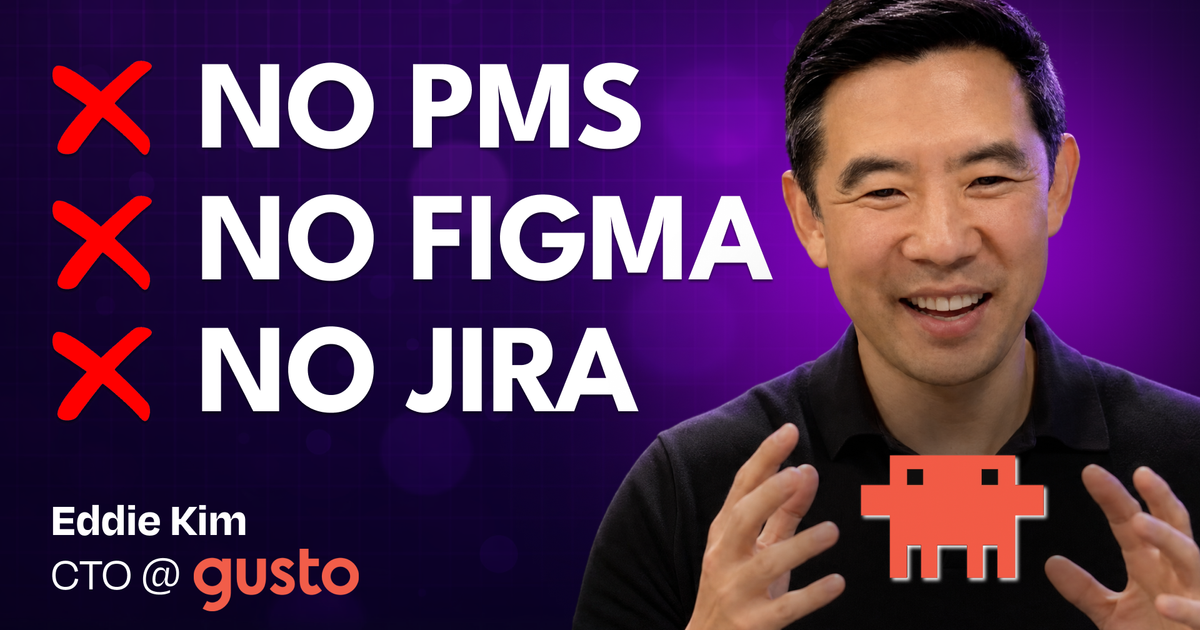
A Five-Person Team, Ten Weeks, No Jira: What Agentic Development Actually Looks Like in Production
Lenny's Newsletter
Gusto's new product line shipped by treating Claude Code as a peer rather than a utility — eliminating standups, tickets, and lengthy specs entirely. The implication for design teams isn't just speed; it's a fundamental rethinking of what process overhead was actually solving for, and whether those scaffolds belong in an agentic world.
Forget the Existential Risk Debates — Here's What People Actually Think About AI
Jakob Nielsen's UX Roundup
An analysis of 25,000 videos shows public AI discourse is dominated by entertainment and practical productivity use (68% combined), while the existential risk narratives that dominate tech media barely register. Critically for creative practitioners: resistance is concentrated around creative theft, not job displacement broadly — a more specific and actionable concern than the general anxiety often attributed to non-technical audiences.

Human Control of Superintelligence Won't Come From Smarts — It Will Come From Agency
Jakob Nielsen's UX Roundup
The argument that humans can maintain meaningful control over ASI rests not on outcompeting it cognitively, but on the fact that AI systems have no evolutionary drives — no will to dominate, no survival instinct — making them structurally dependent on human direction. This reframes the designer's role in AI systems: not as a gatekeeper of intelligence, but as the architect of intent.
Quick Takes
The jump from 'using AI' to 'supervising five concurrent AI agents on multi-day tasks' is happening now among non-developers — and the UX for that supervision layer is almost entirely undesigned.
Jakob Nielsen's UX Roundup →Government-gated frontier model releases are no longer hypothetical — with GPT-5.6 and Claude Mythos 5 both restricted to vetted partners, the era of open public model drops may already be ending.
AlphaSignalTwo years of AI video generation progress compressed into a side-by-side comparison reveals how fast generative media is closing the craft gap — continuity and physics remain weak spots, but the trajectory toward production-quality visual output is undeniable.
Jakob Nielsen's UX Roundup →Deep domain expertise in reliability and production-grade systems is gaining pricing power precisely as AI automates the routine implementation work that used to define a senior engineering career — a dynamic design leadership should be watching closely for its own craft.
The Founders Corner