The
Morning
Brief
Wednesday, July 1, 2026
Today's Signal
AI is migrating from conversational assistant to autonomous collaborator—and that shift is forcing a rethink of how knowledge workers structure leverage, delegate judgment, and stay attuned to quality rather than novelty. At the same time, the regulatory scaffolding around frontier models is tightening in real time, suggesting that access to powerful AI will increasingly be a governance story, not just a capability one. For designers and creative leaders, the signal is clear: the tools are maturing fast, but the craft of directing them well is what compounds.
Deep Read

The Chatbot Era Is Ending — What Replaces It Changes Everything About How Work Gets Done
One Useful Thing
The shift from prompt-driven chatbots to autonomous agents with persistent tool access isn't incremental — it's a structural reorganization of how work is assigned, monitored, and completed. When AI can operate for extended periods without human intervention, the role of the human shifts from executor to director, from doing to governing. This piece makes the case that we're already living in that transition, and most workflows haven't caught up.
In the Feed

Treat AI Like a Senior Collaborator, Not a Junior Assistant — And Give It Room to Improve Itself
Design Meets AI
The most effective AI workflows in design research don't come from micromanaging prompts — they come from giving AI high-level goals and letting it self-correct. The counterintuitive throughline: the teams getting the most value are the ones staying most attuned to human needs, not the ones chasing the newest tools.
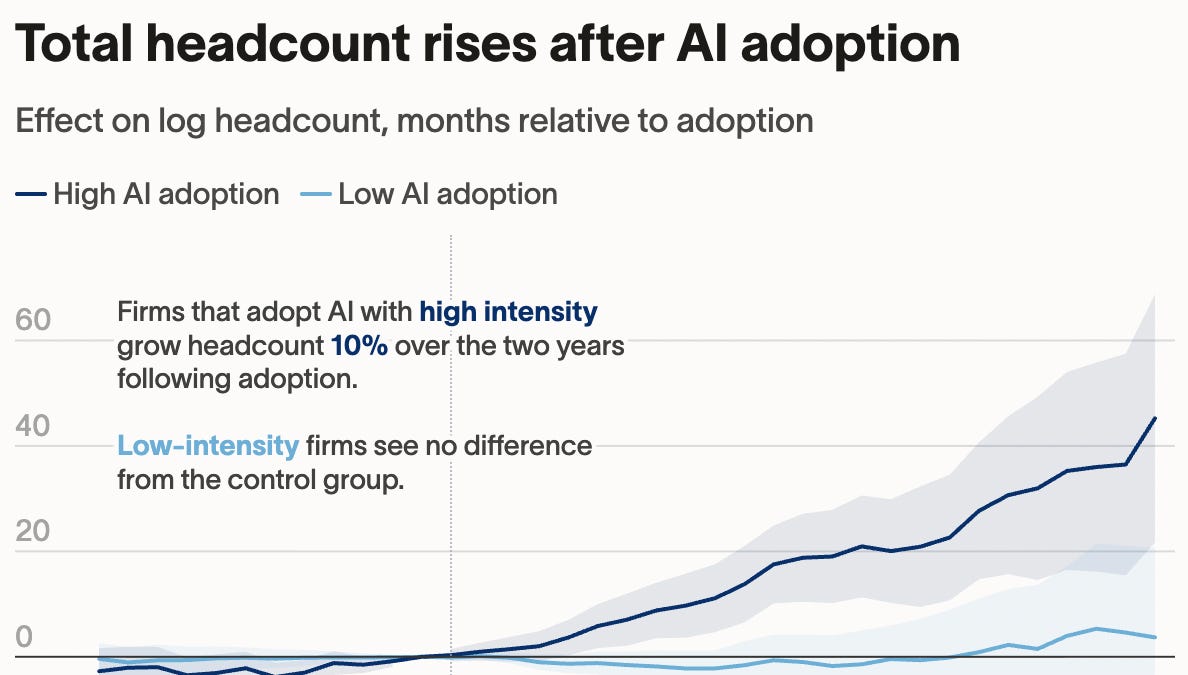
The Data Is In: Heavy AI Adoption Correlates With More Hiring, Not Fewer Jobs
Big Technology
A large-scale study of over 21,000 firms flips the prevailing narrative — companies most aggressively adopting AI are growing headcount faster, not cutting it, with entry-level roles up 12% in the two years following adoption. It's a meaningful data point against the fatalism that has shaped much of the public conversation around AI and employment.
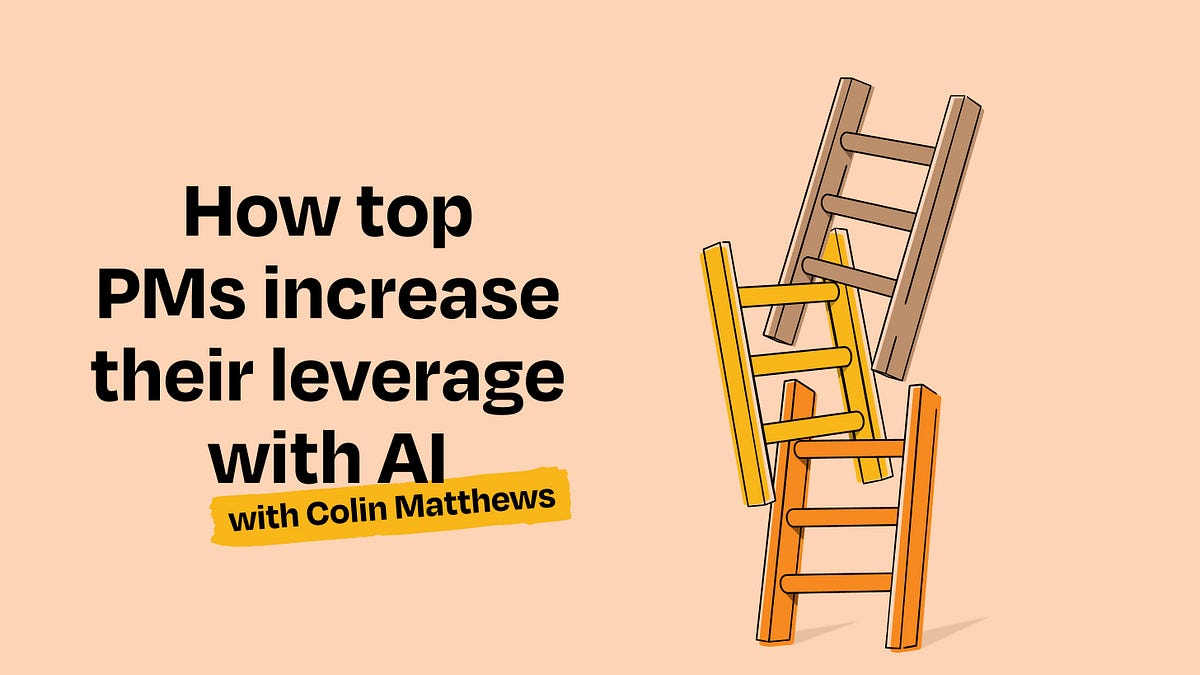
The Three Leverage Ladders: How AI Is Restructuring What It Means to Be a High-Output Operator
Lenny's Newsletter
A framework originally built for PMs maps cleanly onto any creative or strategic role: AI starts as an assistant, graduates to a reviewer, and eventually becomes an autonomous executor with self-validation. Each rung multiplies output — but only if the human at the top knows what good looks like.
Quick Takes
Cursor's new iOS app reframes the mobile phone as a command center for AI agents — you're not coding on the go, you're managing autonomous work happening while you're away from your desk.
AlphaSignalThe government restricting GPT-5.6 to vetted partners before public release is a signal that frontier model access is quietly becoming a regulated resource, not a commodity.
Slow Takes →Two years of AI video generation progress — compared side by side — shows rapid gains in music richness, physics simulation, and animation quality, making generative media a serious production consideration for design teams much sooner than expected.
Jakob Nielsen's UX Roundup →The humanities skills most often dismissed in tech — close reading, nuanced interpretation, critical thinking — may turn out to be the most durable defenses against AI's tendency to produce confident-sounding nonsense.
Slow AI →