The
Morning
Brief
Monday, August 3, 2026
Today's Signal
Today's content circles a central tension: as AI models commoditize and specialize simultaneously, the structural advantage shifts to whoever controls the system architecture around them — whether that's harness engineering for reliable agent workflows, model routers selecting the right tool per task, or frontier labs hoarding their best models to build proprietary products. Underneath this, a quieter question runs: when AI can autonomously build games, scan codebases, and execute entire workflows, what does human creative and technical judgment actually need to defend?
Deep Read

The Model Isn't the Moat: Why Frontier Labs May Stop Selling Their Best Intelligence
Big Technology
As AI models race toward commodity status, the most counterintuitive competitive move may be to stop selling them entirely. The argument here is sharp: labs that license their best models via API are effectively arming every competitor, and the smarter play is to hoard top-tier intelligence and capture value through proprietary products built on top — a structural shift that would reshape who benefits from AI progress and how the ecosystem is gated.
In the Feed
The Generalist Is Losing: Specialized AI Models Are Winning on Every Axis That Matters
Big Technology
Purpose-built models are outperforming frontier generalists on accuracy, speed, and cost for specific tasks — and the rise of model routers means organizations are already quietly assembling fleets of specialists rather than betting on one powerful system.
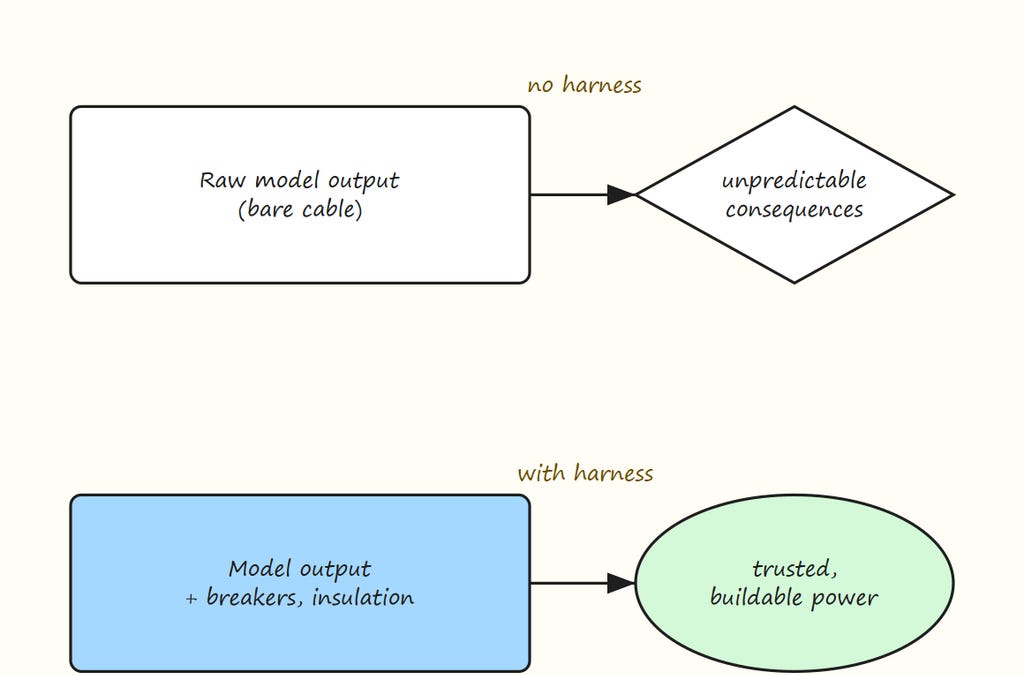
Stop Blaming the Model: Reliable AI Workflows Are an Engineering Problem, Not an AI Problem
Agentic AI
The reliability ceiling on AI coding agents isn't the model — it's the absence of guardrails, deterministic checks, and validation layers around it. Harness engineering reframes AI agent failure as a systems design challenge, with implications for any team building on top of generative AI.
AI-Generated Books Now Take 20% of Amazon Sales — A Preview of Creative Market Displacement
AlphaSignal
The displacement of human-authored creative work is no longer theoretical: AI-written books have captured roughly a fifth of Amazon sales, offering a concrete data point for how generative AI reshapes creative economies at scale.
Quick Takes
The most important prompt engineering insight right now is counterintuitive — the less you over-specify steps, the better the output, because clear objectives with stated constraints outperform detailed instructions that underestimate what models can actually do.
The Founders Corner →GDPR's 'right to be forgotten' is effectively unenforceable against AI systems — models cannot surgically delete inferred information, meaning a significant gap exists between privacy promises made to users and what the underlying technology can actually deliver.
Slow AI →China's AI labs closing the gap despite compute constraints — through distillation, open-source leverage, and fierce domestic competition — suggests the U.S. lead is less durable than assumed and that raw hardware access is not the decisive variable.
Big TechnologyWhen an AI model can build a full AAA-style game in 24 hours autonomously, the designer's defensible value shifts entirely to taste, constraint-setting, and the judgment calls that determine what gets built — not execution itself.
AlphaSignal