The
Morning
Brief
Friday, July 31, 2026
Today's Signal
Today's pool surfaces a persistent tension between technical capability and human judgment: as AI executes faster and more autonomously, the durable question becomes what infrastructure, governance, and taste we wrap around it. The parallel between harness engineering for AI agents and design systems governance is hard to miss — both disciplines are fundamentally about building reliable, scalable systems around powerful but unpredictable primitives. Creative work sits at the center of this shift, with AI compressing execution costs and forcing a revaluation of what human expertise is actually for.
Deep Read

When AI Owns the Code, Taste and Judgment Become the Actual Moat
Slow AI
A developer with faded technical skills shipped two playable games using AI — including a JRPG designed to teach critical thinking — and emerged with a clear thesis: as execution becomes cheap and commodified, the irreplaceable contribution is knowing what to make and why. This maps directly onto the design systems question: when AI can generate components and tokens on demand, the durable value shifts from production craft to the judgment that governs what gets built and how it coheres. The piece makes a compelling case that humanities-style skills — pedagogy, narrative, discernment — are not soft supplements to technical work but the actual leverage point in an AI-assisted creative practice.
In the Feed
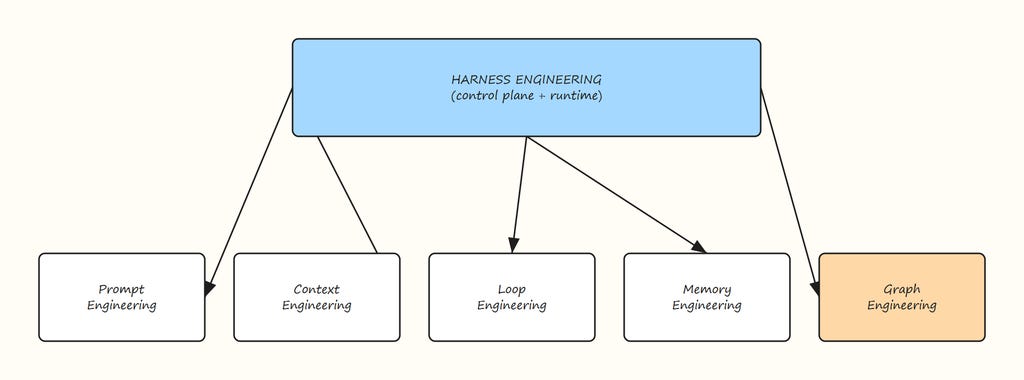
Harness Engineering: The Systems Thinking Frame That Unifies Agentic AI
Agentic AI
Rather than treating prompt engineering, memory, and control loops as separate disciplines, this piece argues they are interdependent layers of a single coherent system — a framing with direct parallels to how design systems practitioners think about tokens, components, and governance as one architecture rather than isolated deliverables.

The AI Tool That Refuses to Surveil Your Employees
Platformer
Granola's approach to meeting transcription — keeping notes private by default and rejecting employer access — positions individual data as a foundational layer for personal AI agents rather than corporate monitoring infrastructure, raising sharp questions about who AI productivity tools are actually designed to serve.

Compound Pickers: A Small Interaction Pattern With Real Cognitive Payoff
UX Movement
Consolidating related selection fields into a single compound interaction reduces the context-switching tax on working memory — a reminder that component-level design decisions in a system have measurable effects on cognitive load at scale.
Quick Takes
AI-generated books now claiming 20% of Amazon sales is the clearest signal yet that creative displacement isn't theoretical — it's a market condition designers and writers are already operating inside.
AlphaSignalClaude autonomously building a full AAA-style game in 24 hours reframes the ceiling question: the bottleneck is no longer execution capacity, it's the quality of creative direction and constraints given to the agent.
AlphaSignalThe reliability gap in agentic AI systems isn't a model problem — it's a systems design problem, which means designers and architects who think in governance and guardrails have more to contribute here than the hype suggests.
Agentic AI →As AI tools commodify technical execution across design, engineering, and now creative writing, the pattern holds: the work worth protecting is the judgment layer — what gets made, for whom, and governed by what principles.