The
Morning
Brief
Thursday, July 30, 2026
Today's Signal
AI is rapidly collapsing the distance between creative intent and shipped artifact — generating entire games from a single prompt, automating exhaustive testing, and handling complex multi-step tasks autonomously. Meanwhile, the interaction layer itself is evolving fast, with voice, persistent memory, and stateless agents redefining how humans and AI systems stay in sync. For designers, the implication is clear: the systems, tokens, and structured thinking that define design practice are increasingly the strategic layer that gives AI output meaning and consistency.
Deep Read

AI as the Exhaustive Tester You Never Had: What Browser Automation Reveals About UX Craft
Lenny's Newsletter
AI models uncover bugs and friction that human testers systematically miss — not because humans are careless, but because they instinctively avoid edge cases. The insight for designers is sharper: persona-based AI testing surfaces UX friction that synthetic research never reaches, and open-ended prompts outperform exhaustive checklists when guiding frontier models. This reframes AI not as a design replacement but as a relentless quality probe that changes what 'done' means.
In the Feed
55,000 Lines from One Prompt: What Claude Opus 5's Game Generation Means for Creative Work
AlphaSignal
A fully functional first-person shooter — physics engine, audio, AI soldiers, playable map — generated from a single text prompt with no external assets. The capability gap between 'AI as assistant' and 'AI as autonomous creative executor' is closing faster than most design workflows have accounted for.
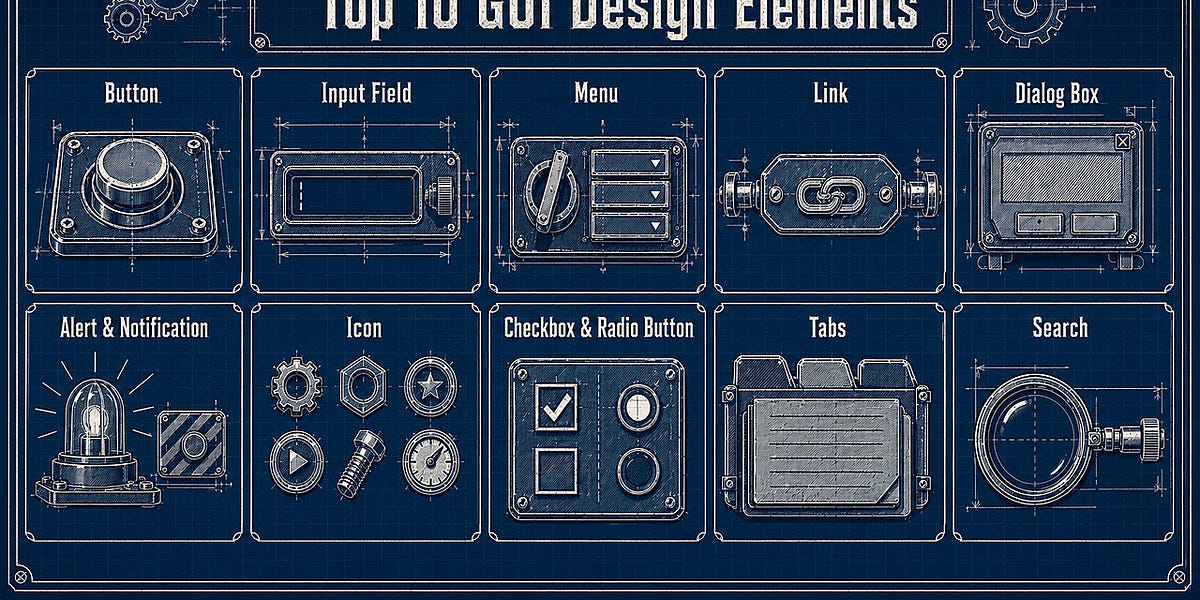
The Ten Elements That Have Always Been the Design System: A Deep Evidence-Based Inventory
Jakob Nielsen
Nearly every interface ever built reduces to roughly ten interaction primitives — buttons, forms, tabs, dialogs, icons, and their kin — each carrying decades of cognitive and behavioral evidence. With 86 distilled guidelines, this is a rare attempt to codify the underlying grammar of UI, which is exactly the kind of foundational thinking that makes design systems durable rather than merely current.
36 Billion Hours: AI Engagement Has Doubled, and Interaction Quality Is Now the Competitive Moat
Jakob Nielsen
Global AI app usage doubled in a single year, and with low switching costs, the differentiator is no longer model capability alone — it's the quality of the interaction design. The platforms winning intensive use are the ones where the experience is crafted, not just functional.
Quick Takes
When an AI can autonomously discover cryptographic flaws that stumped human experts for two years, the definition of 'expert-level work' shifts — and designers should be asking which parts of their craft are next.
AlphaSignalThe MCP protocol going stateless isn't just an infrastructure story — it means AI agents can now scale horizontally like web services, which has direct implications for how design tools and pipelines that rely on agent integrations get architected.
AlphaSignalAI-generated books capturing 20% of Amazon sales is the clearest early signal of what structural market displacement looks like when AI output reaches 'good enough' at scale — a pattern worth watching for visual creative work.
AlphaSignalThe compound picker pattern is a small but instructive example of how reducing cognitive load often means consolidating — fewer UI elements, not more — which is a principle that applies equally to component architecture decisions in design systems.
UX Movement →