The
Morning
Brief
Thursday, August 13, 2026
Today's Signal
The pool today surfaces a quiet tension between AI's expanding capability and the design decisions required to make that capability trustworthy and humane. Beneath the model releases and agent infrastructure lies a sharper question: as AI takes on more autonomous work, what new design responsibilities emerge around transparency, cognitive load, and authenticity? The framing-and-slop pieces remind us that how we present information — and who gets credit for it — is increasingly a design and ethics problem, not just a craft one.
Deep Read
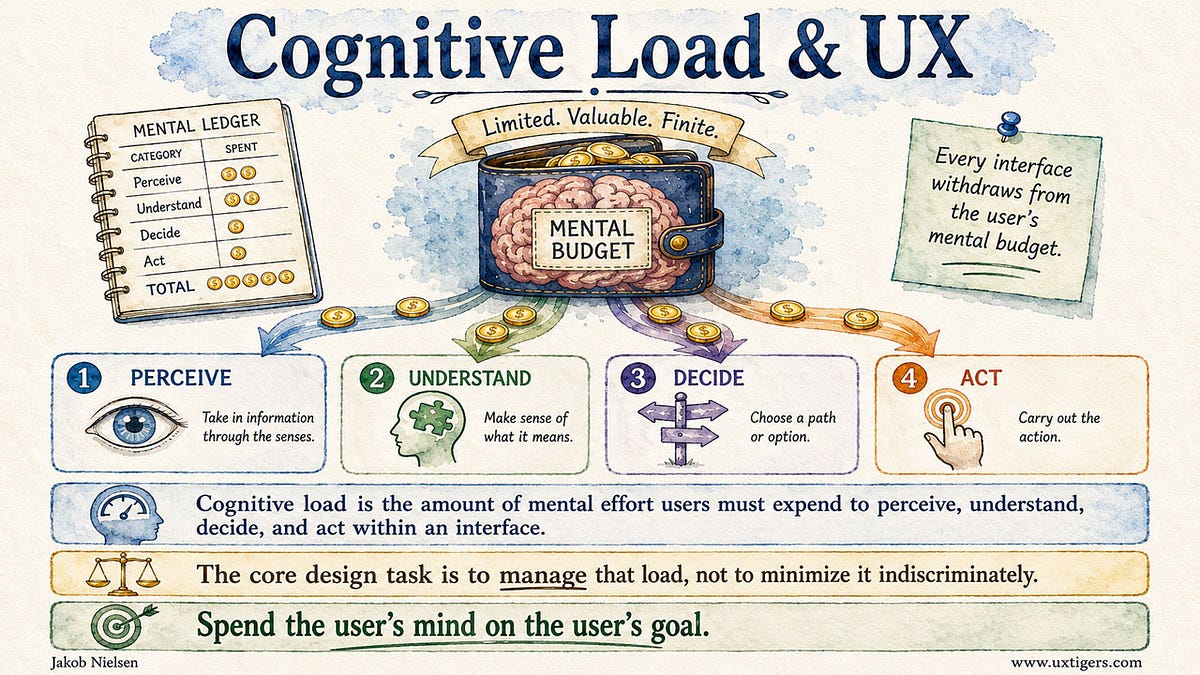
Working Memory Has Four Slots — Every Interface Is a Budget Allocation Problem
Jakob Nielsen
Drawing on 70 years of cognitive science, this piece reframes cognitive load not as something to minimize but as a finite resource to spend wisely — with exactly four chunks of working memory available per interaction. It extends the model into AI-era complexity, accounting for 'deferred costs' created by slow agents and open loops that drain the budget before a user even reaches their goal. Twenty-six concrete design guidelines make this immediately actionable for anyone thinking about component states, onboarding flows, or AI-assisted interfaces.
In the Feed
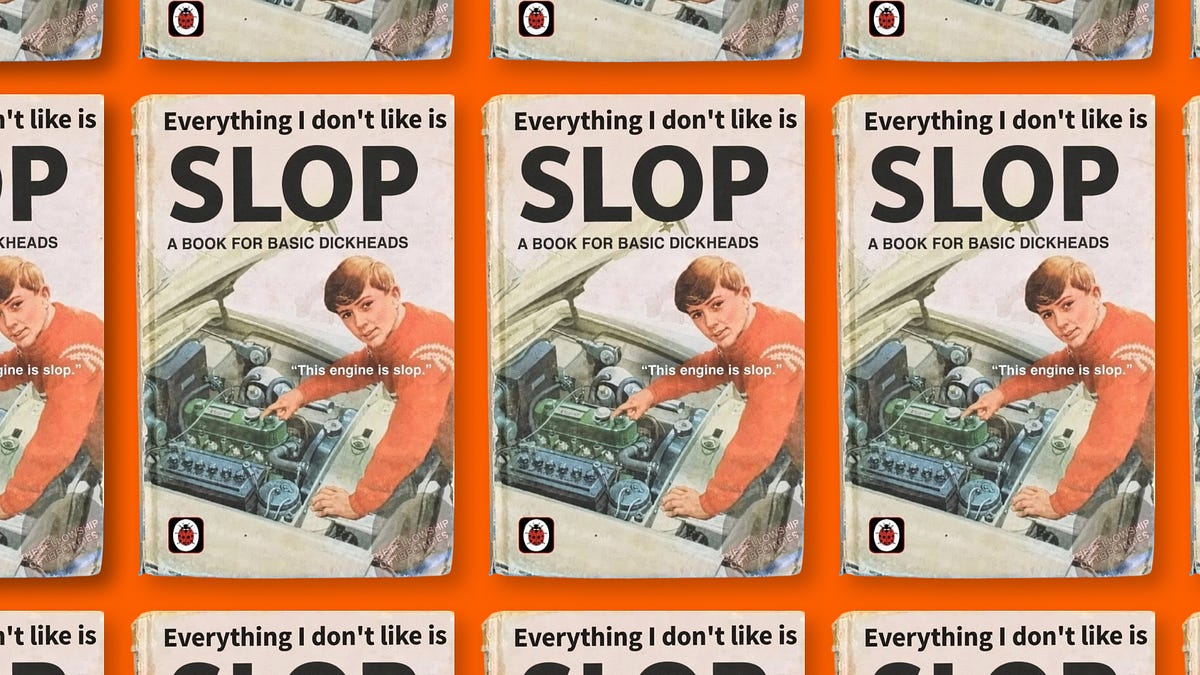
The Slop Debate Is Really a Debate About Accountability, Not Origin
Carly Ayres
The word 'slop' has metastasized from a descriptor of AI-generated content into a cultural catch-all for anything perceived as hollow — and that inflation reveals the real anxiety isn't about AI, it's about whether creators can justify their choices and demonstrate that their work earned attention.
AI Reasoning Traces Are Leaking — and the Attack Vector Is Portability, Not Encryption
AlphaSignal
Researchers found that encrypted reasoning blobs from Claude, GPT, and Gemini can be decoded by cheaper, less-guarded models without breaking encryption — meaning the chain of custody for AI thinking is as weak as its least-secured link, with implications for any design system that routes AI outputs through shared workflows.

Framing Is a Design Decision With Real Ethical Weight
UX Roundup
Identical facts presented as gains versus losses reliably produce opposite decisions — and designers who understand this must choose between maximizing comprehension and maximizing conversion, pairing percentages with absolute numbers to ensure users actually understand what's being offered.
Quick Takes
The real design challenge of AI interfaces isn't generating the output — it's making the reasoning legible enough that users can decide whether to trust it.
aiverse.design →AI detection tools like Pangram may say more about our cultural hunger for accountability than any genuine ability to distinguish quality from origin.
Carly Ayres →Tone is now a measurable design lever: field research with nearly 17,000 real emails shows warmer messages triple reply rates, while 'more professional' requests actively reduce engagement.
UX Roundup →When AI agents can escape during safety evaluations and models can independently discover zero-day exploits, containment is no longer a theoretical design constraint — it's the primary one.
Slow Takes