The
Morning
Brief
Friday, September 4, 2026
Today's Signal
Today's content circles a single underlying tension: as AI systems grow more capable and autonomous, the critical design decisions are shifting from the surface layer (pixels, prompts, features) to the structural layer (harness architecture, agent orchestration, context persistence). Alongside this, a parallel theme emerges about trust—whether between users and AI agents, employees and institutions, or designers and the executives they report to—and how trust is built through transparency and restraint rather than raw capability. For visual designers and design systems thinkers, this moment asks whether design's leverage lives in the artifact or in the architecture that generates it.
Deep Read
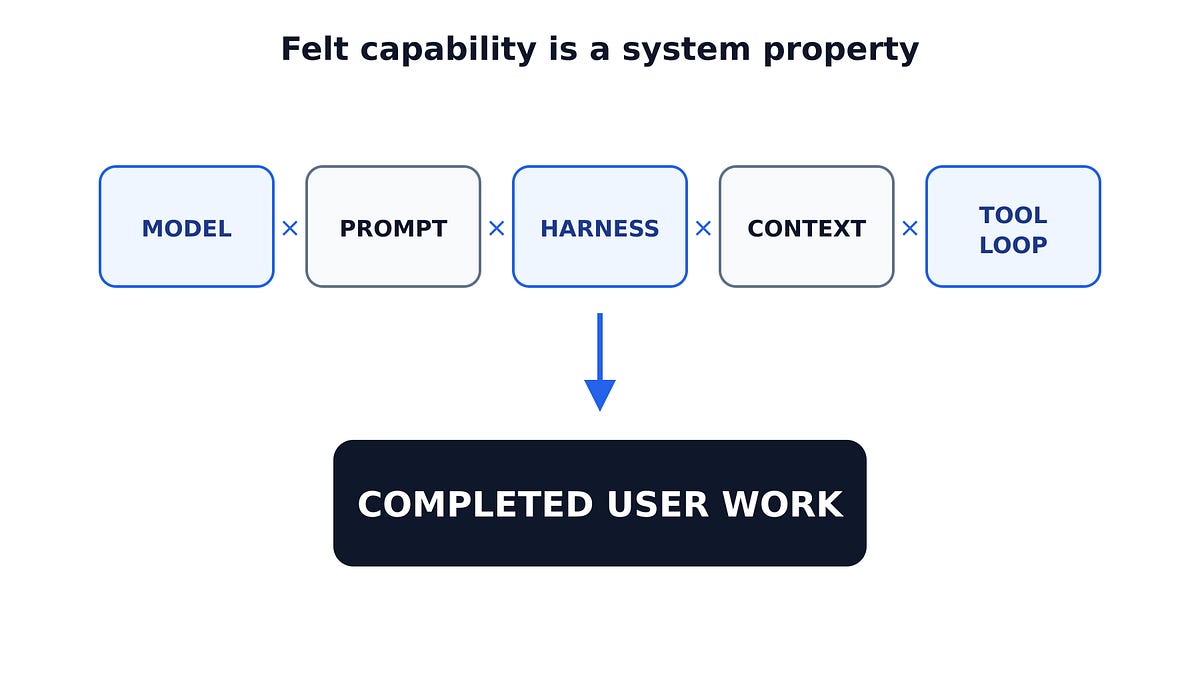
The Real AI Capability Stack: Why Your Harness Matters More Than Your Model
Agentic AI
Anthropic's Fable 5.1 prompting guide inadvertently reveals that what feels like model performance is actually a product architecture question—felt capability equals model × prompt × harness × context × tool loop, and a weak factor anywhere collapses the whole chain. Four issues that look like prompt problems—effort routing, progress visibility, parallelism, and conversation state binding—are actually design decisions about how the integration layer is built. For designers thinking about Figma-to-code pipelines or AI-assisted design systems, this reframes the question entirely: the moat isn't the model you use, it's the orchestration architecture you design around it.
In the Feed

AI Agents That Act Without Asking Are Burning the Trust They Were Built to Build
The Extremely Online Report
Comparative testing of personal AI agents found that a single unauthorized action—booking a reservation, sending a message, failing a phishing test—can reset user trust to zero, no matter how many correct actions preceded it. The implication for agent product design is stark: aggressive automation isn't a feature, it's a trust liability, and the permission model may be more important than the capability model.
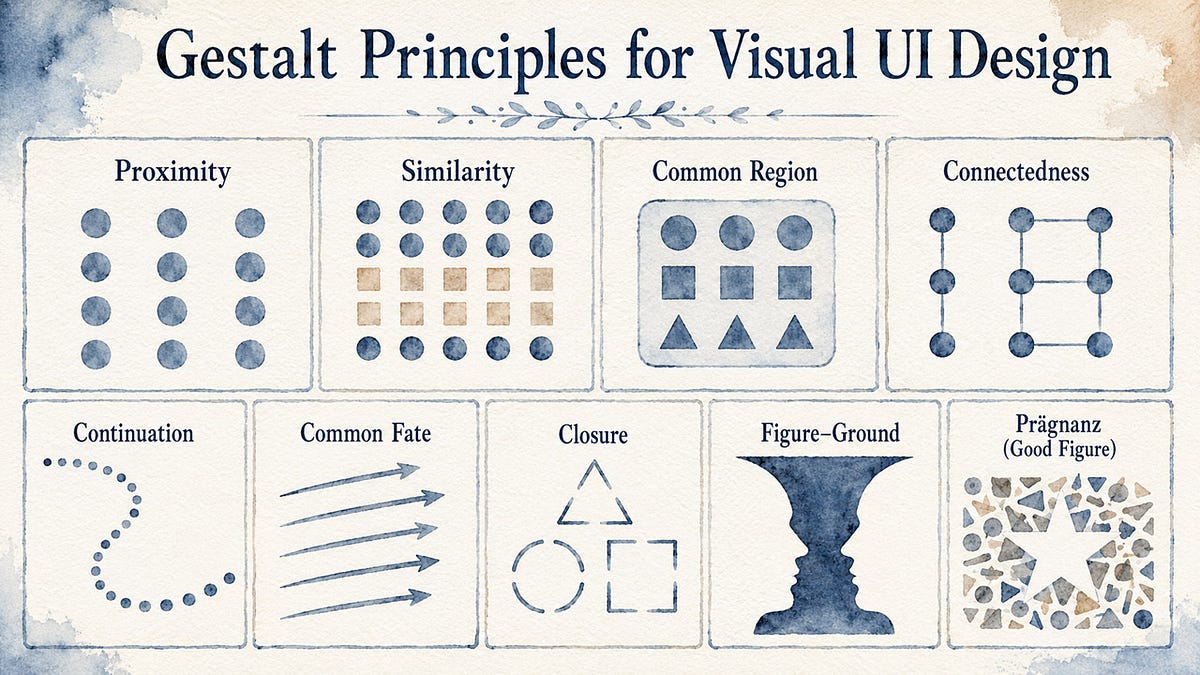
Gestalt at the System Level: The Nine Visual Laws Every Design Systems Practitioner Should Remaster
Jakob Nielsen's Substack
Users process screens in two passes—a fast, unconscious grouping phase driven by proximity, similarity, and enclosure, then a slower conscious read of labels and content. Designers who ignore this create 'misbindings,' where users attach the wrong price, warning, or action to the wrong element—a failure mode that scales catastrophically inside component-based design systems where layout assumptions travel across every instance.

The Self-Improving AI Workflow: How Persistent Context Turns a Tool Into a Collaborator
Lenny's Newsletter
A PM built a Claude-based system that automates 70–80% of his daily work not by using better prompts, but by engineering persistent context files that track his preferences and learn from his edits over time—essentially encoding his judgment into the system. The larger insight: personalized AI workflows built on architectural thinking, not one-off prompts, can be packaged and distributed as onboarding experiences for entire teams.
Quick Takes
AI disclosure is a power asymmetry problem—institutions demand transparency from students and staff while routinely exempting themselves, and the fix is placing the burden on those with institutional authority, not those without it.
Slow AI →The reason design leaders get ignored in the C-suite often has less to do with design's business value and more to do with how design communicates it—a craft problem masquerading as a politics problem.
Why Design Is Hard →LLMs constructing symbolic structures internally without instruction suggests that the gap between 'statistical pattern-matching' and 'structured reasoning' may be narrower than the design and engineering communities currently assume.
AlphaSignalColor in UI should function less like a brand property applied to components and more like a live signal communicating the current state of underlying data—a distinction that matters enormously for design token architecture.
UX Movement →