The
Morning
Brief
Monday, September 7, 2026
Today's Signal
AI is quietly reshaping the foundations of knowledge work — not just accelerating tasks, but restructuring how skills are built, how consensus forms, and how systems make decisions invisibly. Meanwhile, the tools and paradigms designers rely on are being stress-tested against decades of accumulated craft wisdom, raising the question of what actually endures when everything accelerates.
Deep Read

AI Makes You Look Better Right Up Until It Doesn't: The Hidden Skill Erosion Problem
The Founders Corner
Students using AI scored 18% higher on assisted work but 20% worse on independent exams six months later — a gap that maps directly onto design and engineering teams shipping AI-generated outputs without the depth to maintain them. The distinction between assisted performance and genuine mastery is becoming one of the most consequential strategic questions for any knowledge-work discipline. This isn't just a productivity story; it's a capability atrophy story with long-term organizational consequences.
In the Feed
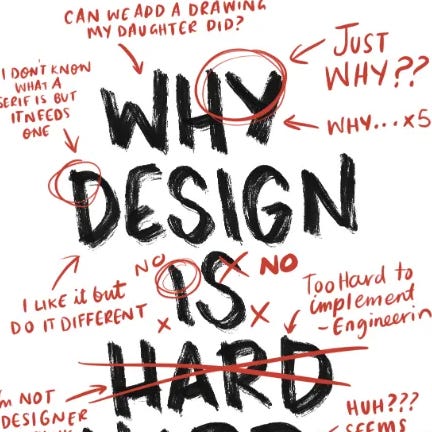
Why Design Leaders Keep Getting Ignored in the C-Suite — and How Communication Style Is the Culprit
Why Design Is Hard
The problem isn't that executives don't value design — it's that the way design leaders communicate often reinforces a perception of insularity rather than strategic partnership. Understanding the ego and framing patterns that create this distance is foundational for anyone trying to move design influence upstream.
AI Systems Are Silently Reorganizing What You See — Without Telling You
Jakob Nielsen's UX Roundup
After a single platform update, the sources underpinning AI-generated answers shifted by a factor of 46, yet users experienced no visible change in outputs. The invisible editorial layer inside AI systems represents a new and largely unexamined design problem: how do you build trust and transparency into systems whose decisions are structurally hidden?

42 Years of the Tools Palette: Why This UX Pattern Refuses to Die
Jakob Nielsen's UX Roundup
The persistent grid of mutually exclusive mode icons has survived four decades of creative software precisely because it externalizes state — making the designer's current mode visible and spatially predictable. Modern tools that bury tools in flyouts or weaken mode feedback aren't innovating on this pattern; they're quietly degrading it.
Quick Takes
AI-assisted work that doesn't build underlying mastery is just deferred skill debt — and design teams shipping components they can't debug are accumulating it fast.
The Founders Corner →Claude can now operate macOS apps silently in the background — the agentic design tool future just got a lot more concrete and a lot less theoretical.
AlphaSignalTeams routinely leave meetings believing they've aligned when nearly three buried disagreements remain unresolved — AI-assisted structured questioning is now a more reliable consensus detector than human conversation alone.
Jakob Nielsen's UX Roundup →Cursor reaching $1B ARR in three years versus Figma's thirteen isn't just a growth story — it signals that AI-native tools are compressing the entire competitive timeline design platform incumbents used to count on.
The Founders Corner →