The
Morning
Brief
Friday, September 25, 2026
Today's Signal
AI capability is accelerating on multiple fronts simultaneously — from multi-agent coordination to visual design benchmarks — creating pressure for designers to understand not just how to use these tools but how they're structuring new kinds of creative and knowledge work. Underneath the tool churn, a quieter question persists: as AI handles more of the generative labor, what does craft, judgment, and authorship actually mean for a designer? The UX research in today's pool reinforces that human cognitive constraints haven't changed, even as the tools surrounding them have.
Deep Read
AI Is Now Competing on Design Judgment — Not Just Code Generation
AlphaSignal
Claude Opus 5.5 topping visual design benchmarks across all tested models signals a meaningful threshold: AI is no longer just a code-generation or copywriting tool but is now being evaluated on tasks central to design craft itself — evaluation, generation, and aesthetic judgment. For design systems leaders, this raises a pointed question about where human expertise creates durable value versus where it's becoming a bottleneck. The conversation is shifting from 'can AI assist design?' to 'what does it mean that AI is getting graded on design?'
In the Feed
Parallel AI Agents Are Here — and They Change How Complex Work Gets Structured
System Design Newsletter
The distinction between subagents working in isolated parallel versus orchestrated agent teams with shared state isn't just an infrastructure detail — it maps directly onto how creative and systems work actually gets decomposed. Understanding when to parallelize versus sequence is becoming a core design leadership skill as AI tooling matures.
The IKEA Effect Has a Dark Side for Designers: You Overvalue What You Built
Jakob Nielsen
The same cognitive bias that drives user loyalty through customization also makes designers systematically blind to the flaws in their own work. Usability-testing with outsiders isn't just good practice — it's the structural antidote to a bias that's baked into the creative process itself.
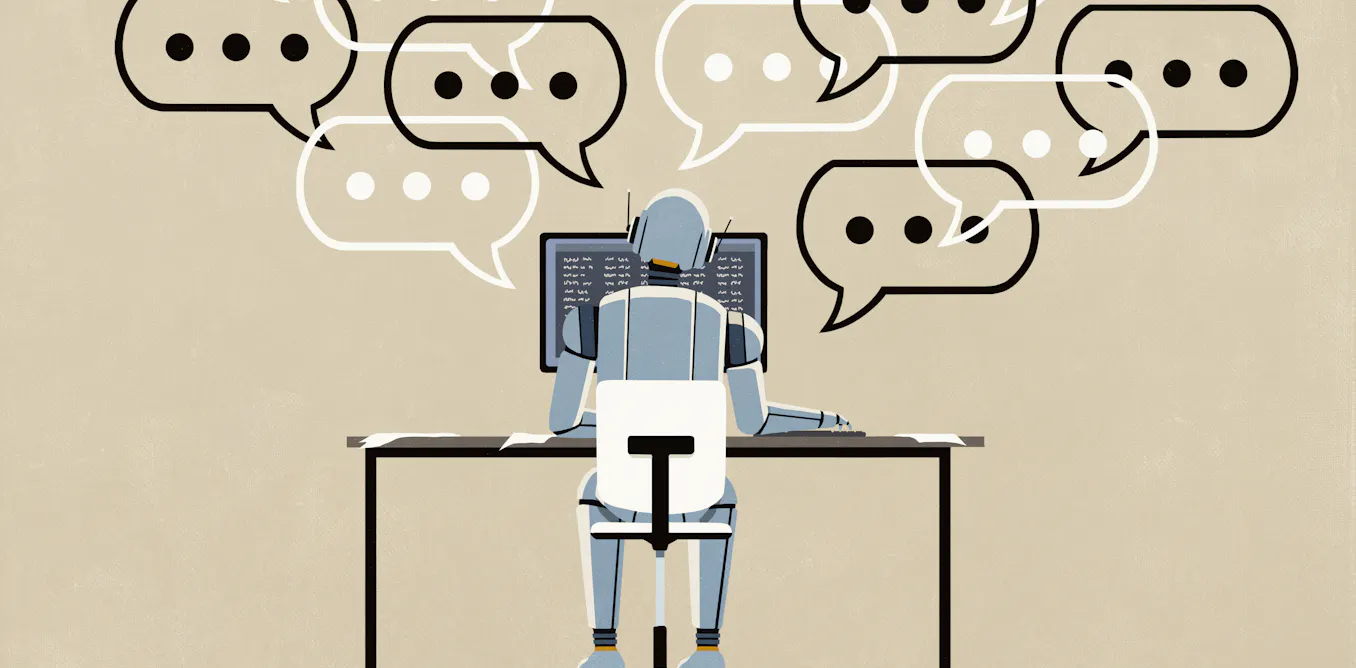
AI Is a Net Job Creator — But the Distribution Is Uneven and Matters
Jakob Nielsen
Survey data showing AI creating twice as many jobs as it eliminates is reassuring on aggregate, but the 9% who received AI-related promotions versus 3% who lost jobs reveals that the upside accrues disproportionately to those who actively engage with the technology. For design teams, neutrality toward AI tools is increasingly a career risk.
Quick Takes
When AI agents running overnight can discover new biological enzymes — work that previously took human experts months — the implicit assumption that 'complex creative synthesis' is safe from automation deserves serious scrutiny from every design leader.
AlphaSignalAlibaba open-sourcing a 7B image generation model with native transparency support is a quiet signal that high-quality visual generation is rapidly becoming a commodity layer, not a differentiator.
AlphaSignalNotification design is one of the highest-leverage UX decisions a team makes, yet it's routinely treated as an afterthought — quiet defaults should be the baseline, not the exception.
Jakob Nielsen →The fact that 91% of engineering teams hit unexpected AI costs last year — with nearly half unable to attribute them to a specific model or team — is exactly the kind of governance gap that makes design systems thinking applicable well beyond component libraries.
AlphaSignal