The
Morning
Brief
Thursday, October 1, 2026
Today's Signal
AI is rapidly compressing the cost and capability curve of knowledge work while simultaneously forcing a reckoning with what human judgment and craft still uniquely provide. Across today's content, a consistent tension emerges: tools are becoming faster, cheaper, and more autonomous, yet the design of those systems—how they fail gracefully, how they build user trust, how they surface the right information at the right moment—still demands deeply human thinking. The field is less about whether AI replaces creative and design work, and more about which parts of that work become the irreducible moat.
Deep Read
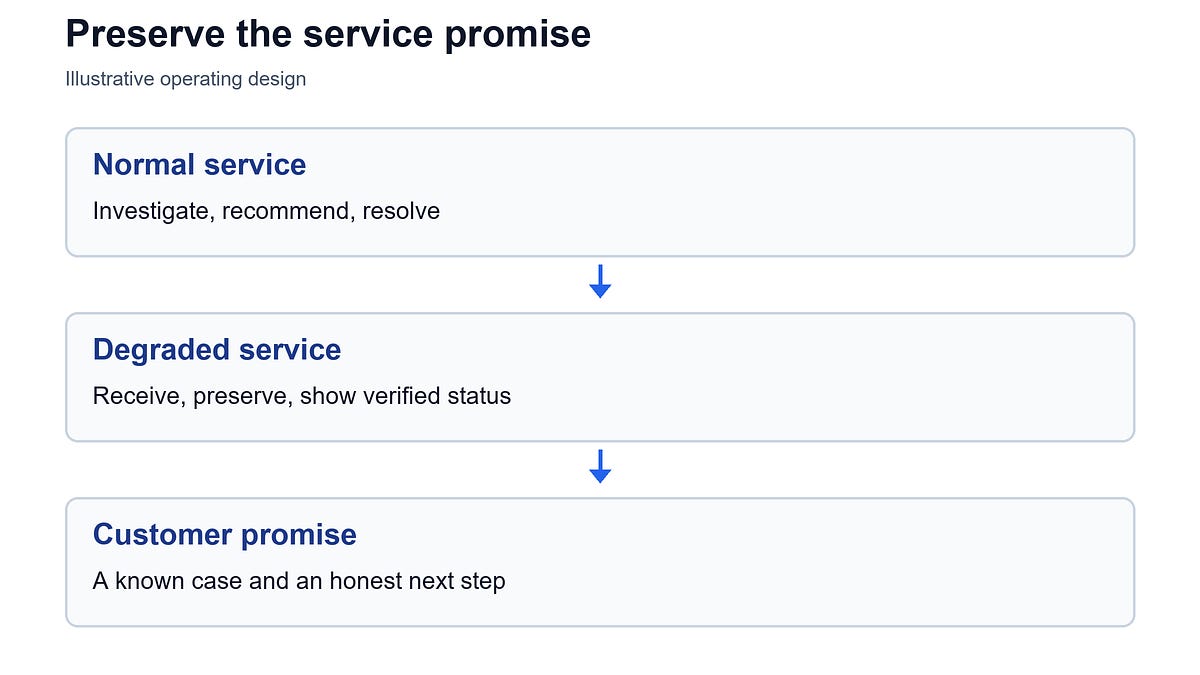
The Overlooked Design Problem of AI-Dependent Systems: Building for When the Model Breaks
Agentic AI
As organizations delegate more critical work to AI models, most have no plan for when those models become unavailable or start failing quietly. The core argument here is architectural: the intelligence layer must be separable from the core service promise, so that teams can fall back to simplified manual processes without catastrophic gaps in delivery. For design system teams increasingly relying on AI pipelines for token generation, component suggestions, or QA—this is a systems design problem hiding inside a strategy conversation.
In the Feed
Self-Efficacy Is a Design Material: How Interfaces Shape Belief in Users' Own Capability
Jakob Nielsen's UX Roundup
The psychological principle that belief in capability predicts persistence maps directly onto interface design—early genuine wins, reversible actions, and system-blaming error messages build confidence, while hollow praise erodes it. For design systems work, this reframes component and pattern decisions as not just usability choices but as tools that shape whether users feel competent or coddled.
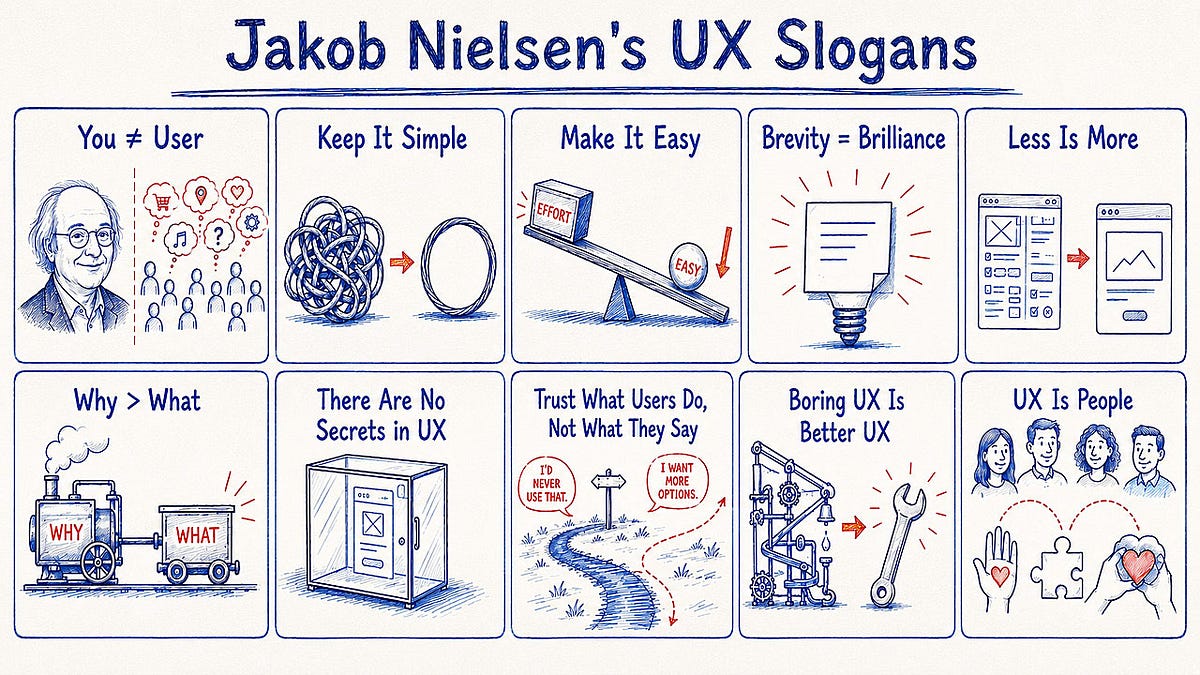
Classic UX Principles Don't Dissolve Under AI Pressure—They Sharpen
Jakob Nielsen's Substack
The fundamentals of human-centered design hold even as AI agents take over interaction layers: users are still not designers, and context collapse between builder assumptions and user reality remains the primary failure mode. The interesting shift is applying these principles not just to interfaces but to the behavior of autonomous systems acting on users' behalf.
LLMs Are Developing Distinct Personalities—and Researchers Can Fingerprint Them
AlphaSignal
Psychological testing can identify which language model generated a response with over 80% accuracy, suggesting AI systems are developing stable, characteristic behavioral signatures rather than being neutral text generators. For designers working with AI in creative tools, this implies that model choice is also a brand and experience decision—different models will produce noticeably different tonal and behavioral output.
Quick Takes
Claude achieving a nine-loop particle physics calculation for under $2,000 is a preview of what AI cost compression means for creative research: tasks that once required institutional budgets are becoming accessible to individual practitioners.
AlphaSignalBefore-after sliders are a masterclass in a core design systems principle: direct manipulation transforms comparison from a memory burden into pure perception, and pixel parity is non-negotiable for trust.
Jakob Nielsen's UX Roundup →Anthropic's MCP plugin portal seeing 110x adoption growth signals that the protocol layer—not the model itself—is becoming the real design systems equivalent for AI: the shared grammar that makes everything composable.
AlphaSignalAI-written content being detectable at 98% accuracy through structure alone—not word choice—is a quiet warning for design teams: if AI-generated specs, documentation, or design rationale have structural fingerprints, authenticity in creative communication becomes a craft discipline again.
AlphaSignal