The
Morning
Brief
Tuesday, October 6, 2026
Today's Signal
Today's pool circles a central tension: AI is collapsing the cost of production—publishing, coding, generating images, making decisions—while human judgment, craft, and curation become the scarce resource that determines quality. For designers specifically, this reframes the role from pixel-pusher to architectural thinker: the systems, tokens, and structured rules you build become the leverage point AI operates within. The question isn't whether AI changes creative work, but whether your design infrastructure is robust enough to be the thing that shapes what AI produces.
Deep Read
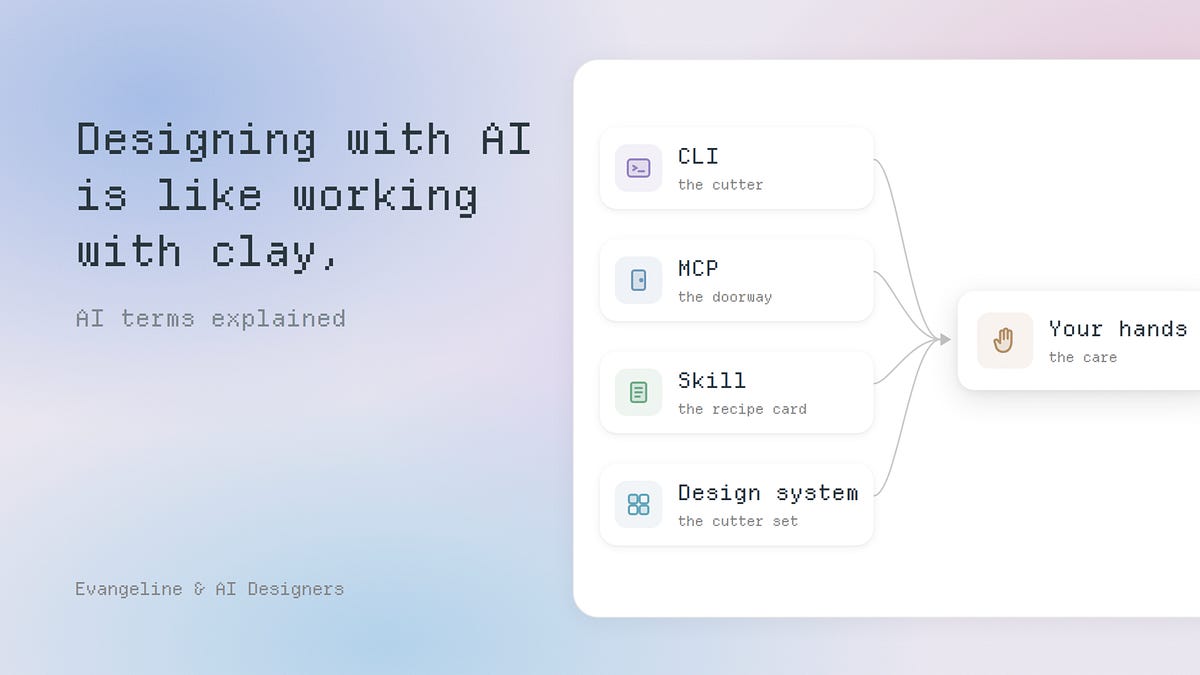
AI as Design Material: Why the Clay Metaphor Changes Everything About How You Work
AI-Native Designers Garden
The most useful reframe here isn't that AI automates design—it's that AI behaves like a raw material that requires active shaping, cutting, and refinement to become purposeful. The piece introduces practical AI infrastructure concepts (CLIs, MCPs, skills, design systems) as the armature designers must build to direct that material, suggesting that a well-structured design system isn't just a handoff artifact but the actual control surface for AI-assisted creation. This positions design systems as creative infrastructure in a much deeper sense than token libraries alone.
In the Feed

The Prompt Box Is the Wrong Interaction Model for Creative Work
Jakob Nielsen's UX Roundup
Proactive AI that observes your work and speaks first—flagging logical gaps, surfacing counterarguments—solves a real problem: creators often don't know what they're missing well enough to ask. This has direct implications for how AI design tools should be architected, shifting from reactive assistants to ambient collaborators.
AI Made Publishing Free—and Made Everyone Else's Attention More Expensive
Jakob Nielsen's UX Roundup
When generation costs collapse but reading time stays fixed, the result is an attention tax paid by everyone downstream of the creator. The discipline of communicating only what changed—not everything you can produce—becomes a design and leadership responsibility, not just a writing one.
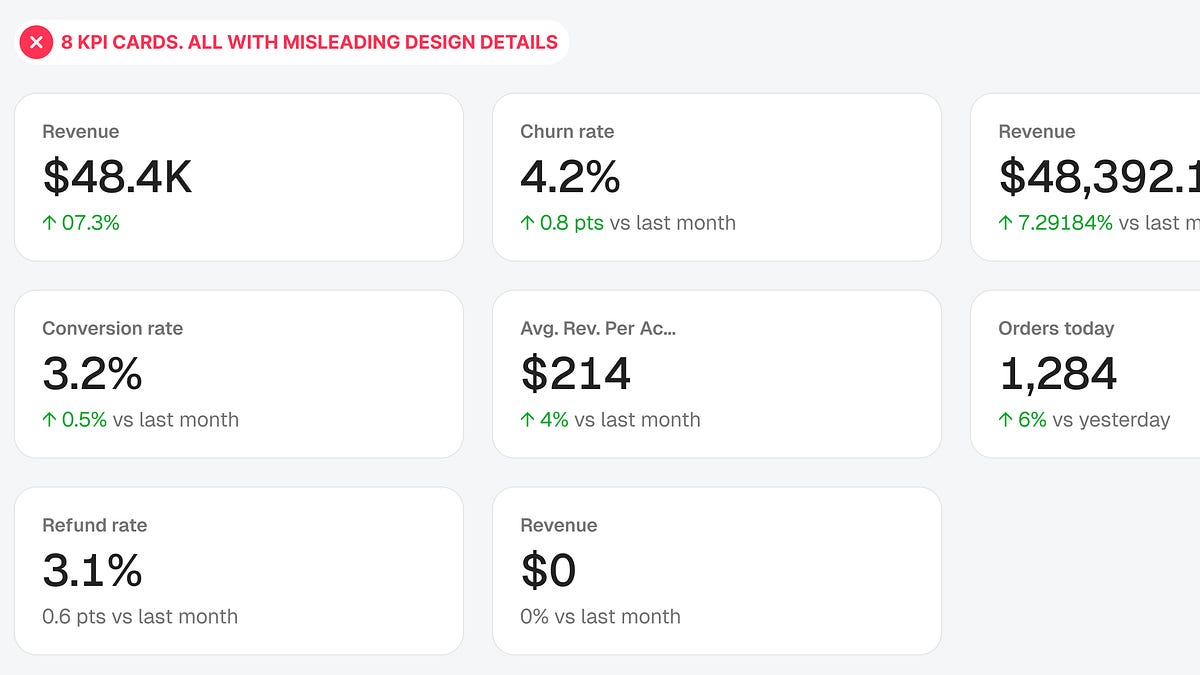
KPI Cards That Pass Review But Fail Users: Eight Details That Separate Good Data Design from Misleading Data Design
UX Movement
The subtlest failures in dashboard design look correct on first glance—a number, an arrow, a color—but collapse when users try to interpret context: compared to what, over which period, does green mean good here? This is a craft-level deep dive into the specific decisions that make data visualizations honest rather than merely tidy.
Quick Takes
Anthropic's Claude has grown from 1.4% to 14.9% daily active user share while ChatGPT's share fell from 41.8% to 30.7%—the market is more contested than the default narrative suggests, and Claude users spend the most time on platform of any competitor.
Big Technology →Claude Code's new TypeScript mod system is the quiet story here: giving designers and developers plugin-level control over an AI agent loop is exactly the kind of extensibility that could make a coding tool feel more like a design system with enforced guardrails.
AlphaSignalAI at 79× cheaper capability in one year isn't a linear improvement—it's the kind of cost curve that historically restructures which professions and tasks remain economically distinct from commodity work.
Ruben Hassid →The real infrastructure story beneath the AI model race is memory: HBM, DRAM, and NAND each serve different parts of the inference stack, and no single technology optimally balances latency, bandwidth, and cost—meaning the hardware layer will remain a meaningful constraint on what agentic systems can actually do.
Agentic AI →