The
Morning
Brief
Thursday, October 15, 2026
Today's Signal
Design practice is being restructured at every layer simultaneously — from the interaction paradigms AI surfaces, to the organizational and systemic thinking designers must now own, to the foundational question of how humans maintain meaningful oversight as delegation deepens. Across today's content, the consistent pressure is toward systems thinking: understanding not just screens but orchestration, not just tasks but trust. The designer's core value is shifting from execution to judgment about when and how much to hand off.
Deep Read
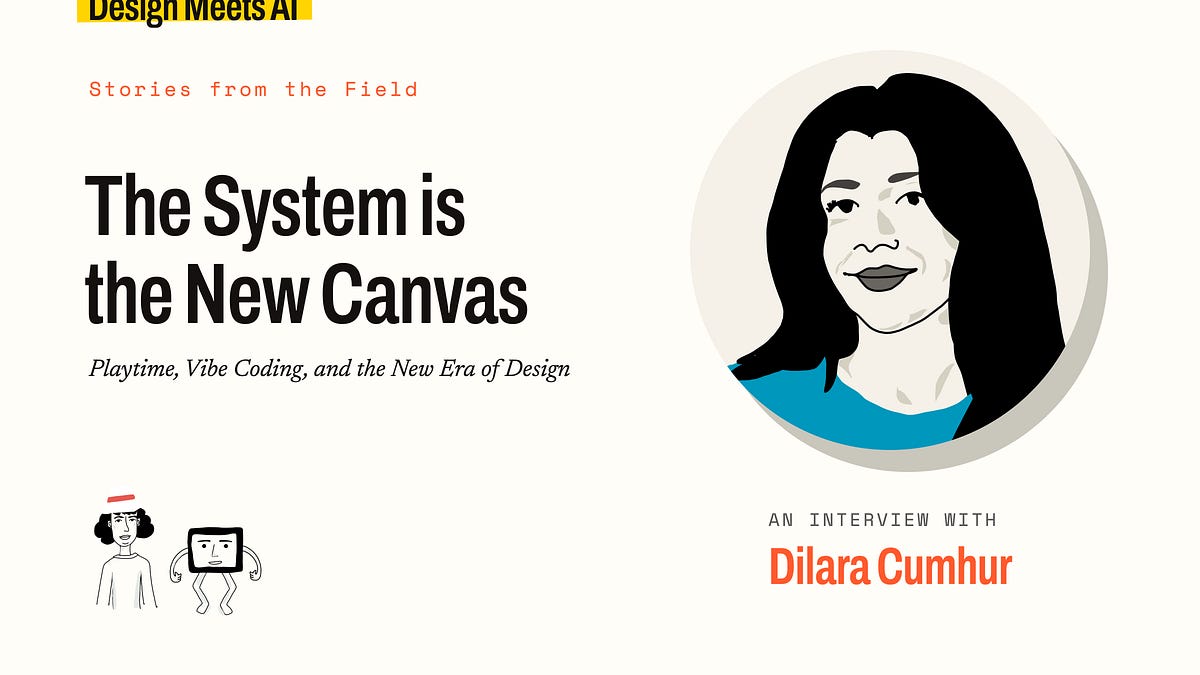
The Canvas Is Now the System: What Design Leadership Actually Means in an AI-Orchestrated World
Design Meets AI
When the design surface expands from 2D screens to multi-interface, backend-orchestrated systems, the designer's role stops being about artifact production and starts being about judgment architecture. The key strategic moves: carve out low-stakes experimentation space to build genuine AI fluency, externalize your own design expertise into AI as a sounding board, and hold the line on human judgment precisely where the stakes are novel or high. This is the clearest articulation yet of what it means for a design leader to stay relevant — not by resisting AI, but by deciding deliberately what to delegate and what to protect.
In the Feed
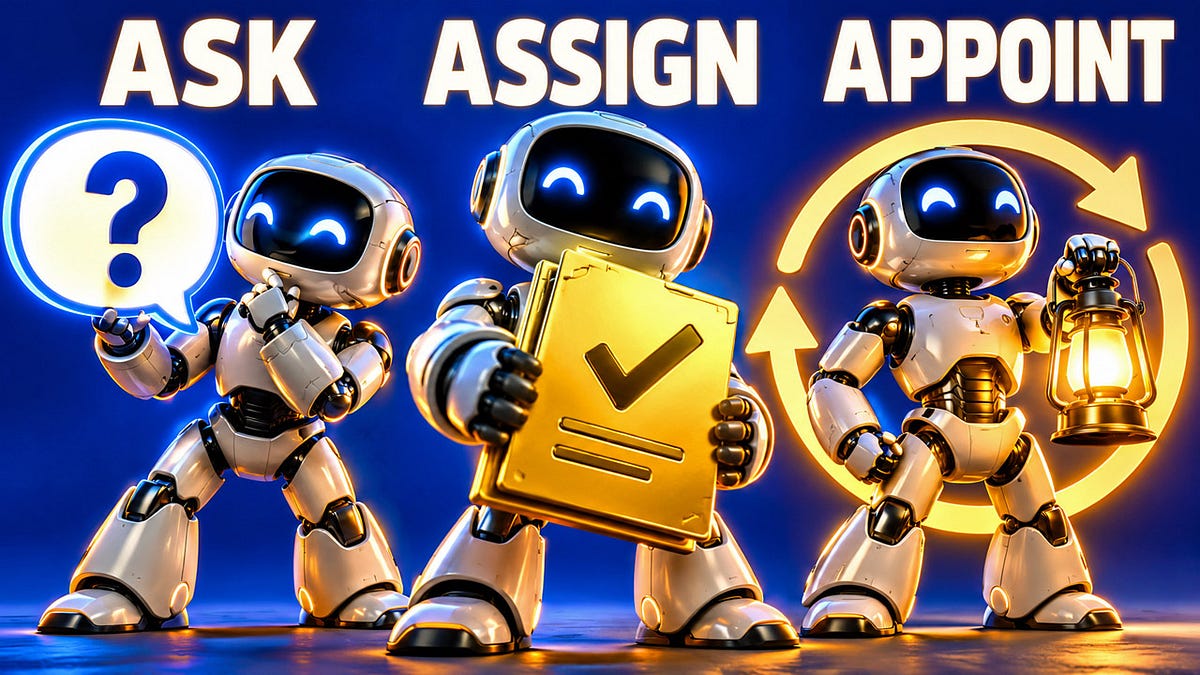
The Delegation Ladder: Three AI Interaction Modes and the Interface Design Challenges Each Creates
Jakob Nielsen
Turn-taking, task agents, and always-on agents aren't competing paradigms — they're a spectrum users traverse constantly, each with its own failure modes around trust, error detection, and initiative. The underappreciated design problem is preventing any of these modes from becoming a trap users can't exit gracefully.

Human Vigilance Has a 30-Minute Cliff — Your AI Oversight Model Should Account for That
Jakob Nielsen
Sustained human monitoring of AI outputs degrades reliably within 15–30 minutes, making approval queues and review pipelines structurally unsafe at scale. Any system that depends on continuous human vigilance as a safety mechanism needs to be redesigned around that biological constraint.
1,000 Agents, One Task: What Parallelized AI Means for How Work Gets Specified
AlphaSignal
A swarm of 1,000 coordinated agents finding 66 of 70 bugs versus 27 for a single agent isn't just a performance story — it's a signal that the bottleneck in AI-augmented work is shifting from generation to task specification and evaluation design. How you structure the problem increasingly determines the quality of the outcome.
Quick Takes
The hardest interface design question for always-on AI agents isn't what they should do — it's how to make their ongoing activity legible enough that humans can actually trust or correct them.
Jakob Nielsen →Binary pass/fail evaluation is actively harmful for long-horizon AI agent work — you need continuous completion scoring to have any signal worth optimizing toward.
Agentic AI →Confirmshaming and pre-checked consent boxes are two faces of the same ethical failure: using design defaults as coercion rather than clarity.
Jakob NielsenAI at production scale isn't a smarter version of traditional software scaling — inference costs, latency profiles, and reliability requirements demand fundamentally different architectural thinking from the ground up.
System Design One →