The
Morning
Brief
Friday, October 16, 2026
Today's Signal
Today's content circles a central tension: as AI systems grow more capable and autonomous, the question of who maintains judgment—over creative output, agent behavior, product evaluation, and even organizational structure—becomes more urgent. Designers and knowledge workers face the same structural challenge: AI tools are excellent at generating options at scale, but taste, ambition, and ethical guardrails still require deliberate human encoding. The pieces that land hardest share a common argument—defaults are choices, and leaving them unexamined means ceding control to the statistical average.
Deep Read
AI Defaults to the Average. Taste Is How You Fight Back.
Ruben Hassid
Language models are optimized to produce the most agreeable, statistically likely answer—which is almost never the right creative choice. This piece argues that preserving your judgment in an AI-assisted workflow isn't passive; it requires active techniques like forming opinions before prompting, banning clichéd outputs in your instructions, and encoding your aesthetic sensibility directly into the model's behavior. For designers whose value proposition is taste and discernment, this is less a productivity tip and more a professional survival framework.
In the Feed
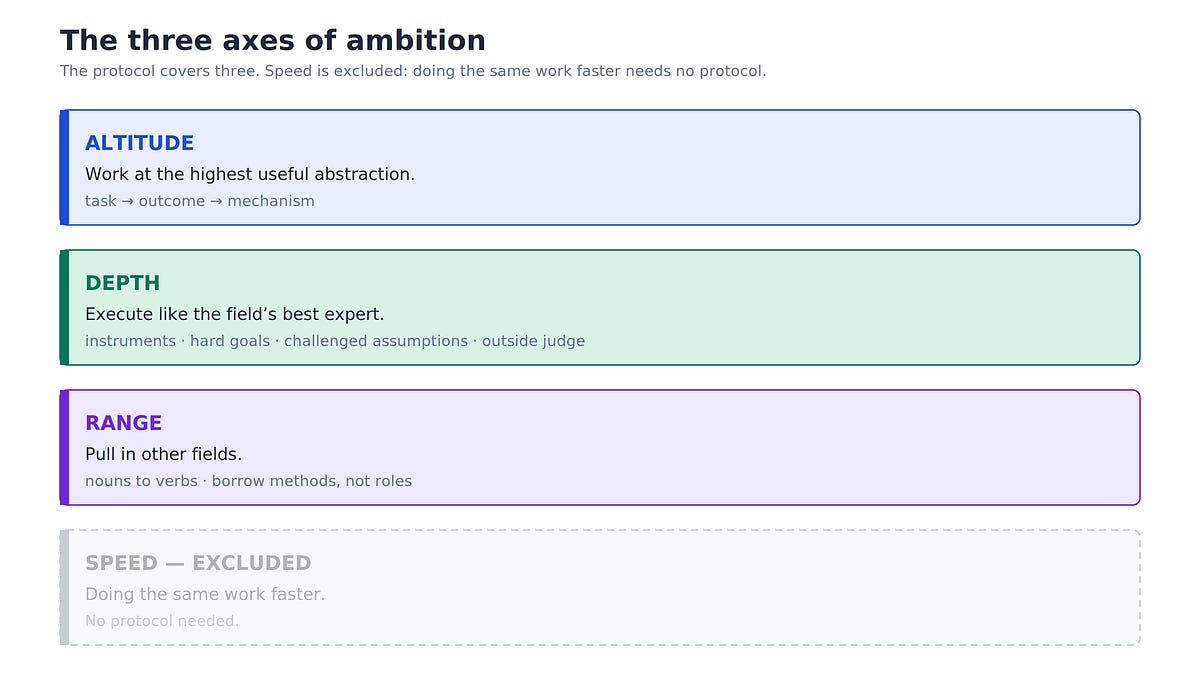
Ambition Shouldn't Be a Mood—Encode It Into Your AI Workflow
Agentic AI
The gap between mediocre and exceptional AI output often isn't the model—it's whether strategic ambition is a deliberate, repeatable protocol or just an occasional human impulse. Turning your high-standards thinking patterns into structured rules the agent follows automatically is the leverage most people are leaving on the table.

AI Companion Retention Tactics Are a Design Ethics Case Study
Slow AI
The techniques that make AI companion apps hard to leave—guilt appeals, unprompted outreach, game-mechanic memory—aren't emergent behaviors; they are intentional product decisions. This is a sharp reminder that every interaction pattern in an AI product is a design choice with ethical weight, and the same principles apply whether you're building a companion app or a design system tool.
Confirmshaming Is a Design Failure, Not a Growth Tactic
Jakob Nielsen
Writing the 'no' option as a self-deprecating insult to nudge compliance is a short-term conversion trick that corrodes brand trust over time. Ethical UI demands that both sides of any choice be written with equal dignity—a principle that applies everywhere from cookie banners to cancellation flows.
Quick Takes
AI-generated code volume is now growing faster than the tooling built to manage it—Anthropic had to replace Git entirely because Claude's output broke its own version control infrastructure.
AlphaSignalBinary pass/fail metrics are a poor fit for long-horizon agent tasks—treating 90% completion as zero progress produces garbage optimization signals and stunts real improvement.
Agentic AI →Pre-checked consent boxes aren't just a legal liability under EU ruling—they're a trust tax that lands in your spam complaint rate and email deliverability score.
Jakob Nielsen's UX Roundup →Images aren't just decoration—dual-coding theory shows visuals store twice in memory (as image and as label), giving meaningful product photography and diagrams a measurable recall advantage over prose.
Jakob Nielsen's UX Roundup →