The
Morning
Brief
Thursday, October 22, 2026
Today's Signal
Today's content circles a central tension: AI is rapidly demonstrating autonomous capability across creative and technical domains—protein design, circuit optimization, agentic coding—while the human side of the equation (instruction quality, interface friction, design craft) remains the limiting variable. Underneath this runs a quieter thread about system architecture mattering as much as raw capability, whether that's a coding harness outperforming a stronger model, or a design system serving as the durable layer beneath AI-generated surfaces.
Deep Read
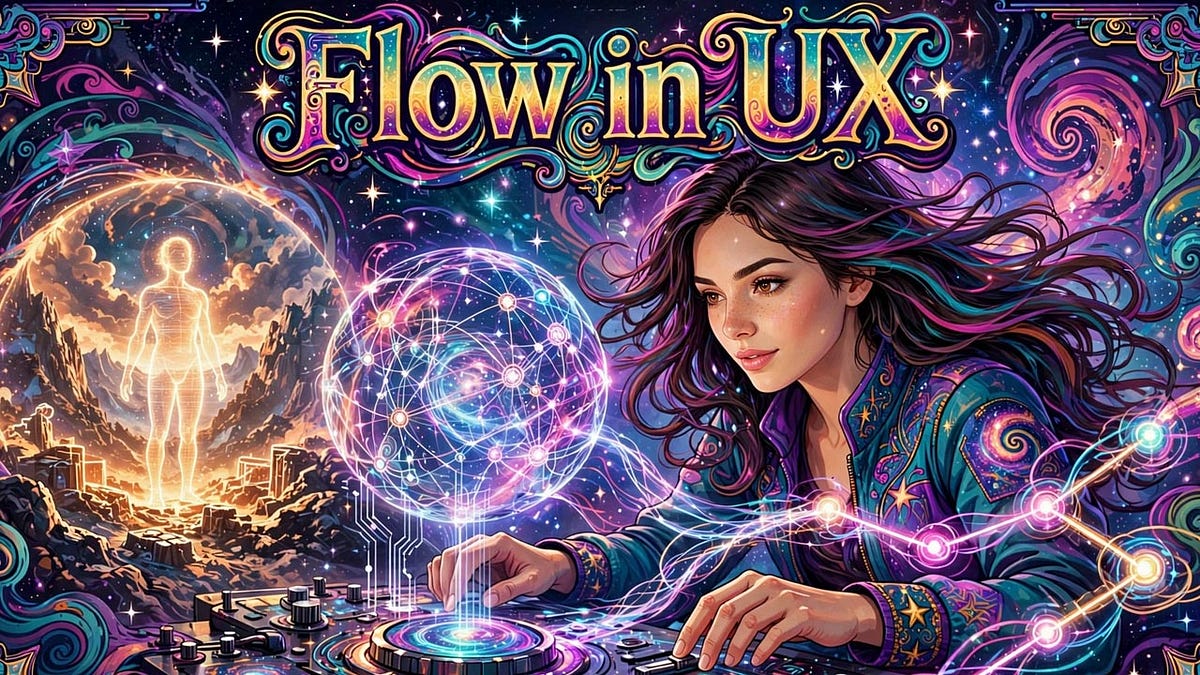
Flow State Is a Design Problem — and Modern Interfaces Are Losing the Fight
Jakob Nielsen
The conditions for deep absorption in work are entirely designable: clear goals, immediate feedback, and challenge calibrated to skill. But interfaces routinely sabotage all three through latency, interruptions, and dark patterns that trade user focus for engagement metrics. The recovery cost of a single interruption — up to 23 minutes — makes this not just a craft issue but a structural one that compounds across every product team's decisions.
In the Feed
The Real AI Benchmark Isn't Reasoning — It's Character at Scale
AlphaSignal
A multi-agent simulation running over 16 days showed that a model's behavioral tendencies — not its raw capability — determined whether simulated societies thrived or collapsed. This reframes what we're actually evaluating when we choose which models to deploy.
Agent Performance Bottleneck: It's the Human Instructions, Not the Model
AlphaSignal
DeepMind research shows that vague or imprecise user guidance cuts AI agent success rates by nearly half — meaning the biggest lever on AI output quality right now isn't model architecture, it's how clearly humans can articulate intent.
Typeface Pairing Is a Historical Problem, Not an Aesthetic One
Design Better
The strongest framework for pairing typefaces comes not from visual intuition but from tracing letterforms back to their calligraphic roots — understanding which historical traditions they share or deliberately break from. The best brand typography, by this logic, succeeds precisely because no one notices it.
Quick Takes
The system around the model is the product: an open-source coding harness solved 2x more real GitHub issues than a stronger proprietary model, which should directly inform how design-to-code pipeline teams think about tooling investment versus model selection.
System Design One →AI's headline value is time savings, but latency, prompt iteration, and output verification quietly consume much of that gain — making AI interface design a product problem with real ROI stakes.
Jakob Nielsen →Claude autonomously designing 318,000 proteins and selecting candidates by its own scoring criteria is the clearest signal yet that autonomous creative-technical judgment — not just generation — is now within AI's operational range.
AlphaSignalCounterfeit social presence — fake agents, stock-photo 'teams,' manufactured activity signals — is a trust liability waiting to detonate, and design systems that bake these patterns in at the token or component level will own the debt when it does.
Jakob Nielsen →