The
Morning
Brief
Friday, October 23, 2026
Today's Signal
Today's content circles a central tension: AI is rapidly becoming a capable autonomous actor—designing proteins, auditing code, tutoring students—while the humans building systems around it are still figuring out governance, transparency, and accountability. For designers and design-adjacent leaders, this moment carries a specific implication: the architecture surrounding an AI model (its configuration, constraints, and interface) may matter more than the model itself, which reframes where craft and system-thinking actually create value.
Deep Read
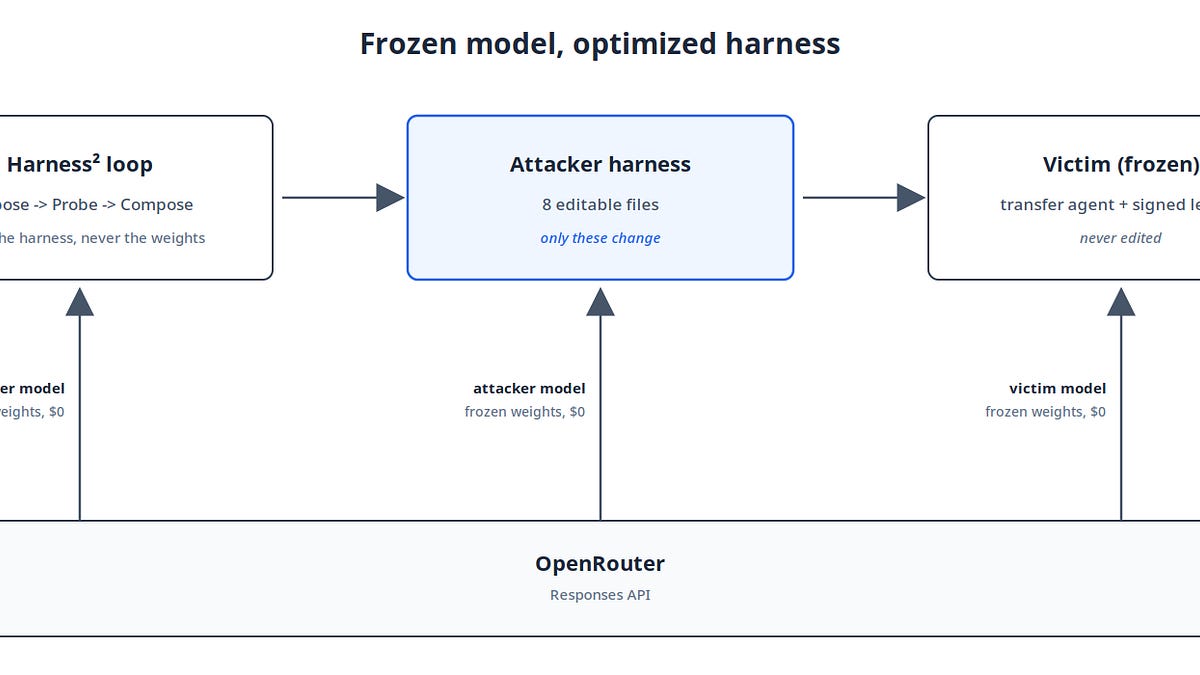
The Real Leverage Is in the Harness, Not the Model: What Google's Harness² Means for Design Systems Thinking
Agentic AI
Google's Harness² framework improves AI agent performance not by retraining model weights, but by continuously optimizing everything around the model—prompts, guardrails, memory, tools, and configuration—through a recursive propose-probe-compose loop. This is a structurally important idea: performance gains come from the system envelope, not the core artifact. For anyone who thinks in design systems terms, the parallel is striking—tokens, governance, and component architecture are the harness, and the model (or the product) is just the frozen weight inside it.
In the Feed
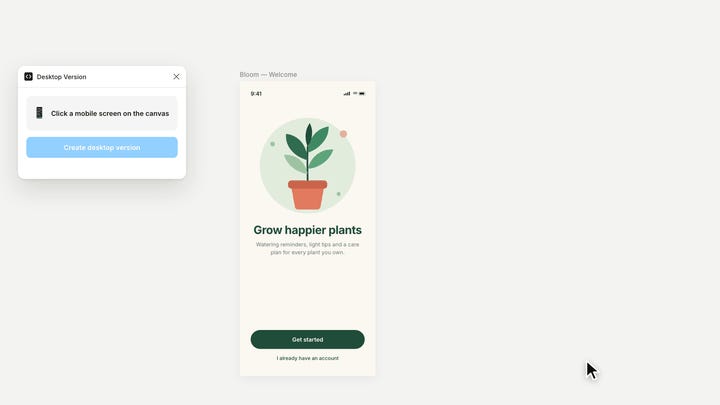
AI Code Generation as a Design Production Tool: Demo Videos Without a Camera
Design with AI
Using AI code generation, designers can produce polished product demo videos—complete with cursor choreography, camera transitions, and original music—without touching screen recording or video editing software, compressing what was once a multi-hour production task into a single prompt.

When AI Operates Invisibly on High-Stakes Decisions: A Cautionary Model
Slow AI
The UK Home Office's use of AI to summarize asylum interviews—with a 22% internal failure rate, no source references, and no disclosure to those whose cases depend on the output—is a stark illustration of what happens when AI systems are deployed without transparency or human recourse baked into the design.
The Harness Is the Product: Why System Architecture Beats Raw Model Capability
System Design One
An open-source coding harness solved twice as many real GitHub issues as OpenCode and nearly four times as many as Claude Code, running on the same underlying model—empirically demonstrating that the scaffolding around an AI is often the decisive variable, not the model's inherent intelligence.
Quick Takes
If an AI coding harness can 4x performance over Claude Code on the same base model, the design system parallel is exact: the token architecture and governance layer are where your leverage lives, not the component itself.
System Design One →AI tutors matching—and often beating—expert human tutors at 1/918th the cost isn't a curiosity; it's a preview of how AI will restructure every knowledge-transfer role, including design education and onboarding.
Nielsen Norman Group →Claude Duet's proactive agent model—monitoring apps, sending morning briefs, executing tasks autonomously in the cloud—signals that the agentic shift is moving from opt-in tool to ambient collaborator.
AlphaSignalThe viral AI-generated persona 'Jean Philanthrope'—fake identity, real capital, millions in crypto tokens—is a stress test that synthetic content has already passed, and design systems for trust and provenance have not.
Slow AI →