The
Morning
Brief
Thursday, June 18, 2026
Today's Signal
Today's content circles a central tension: AI is accelerating execution so fast that the systems built to govern it — security pipelines, git architectures, safety reviews — can't keep pace. For designers specifically, this velocity creates both opportunity (vibecoding, agentic workflows) and structural risk (design systems as governance layers become more critical, not less). Underneath it all, a quieter signal: craft and endurance still matter, and the designers who last will be those who treat creative discipline the same way they treat physical training.
Deep Read
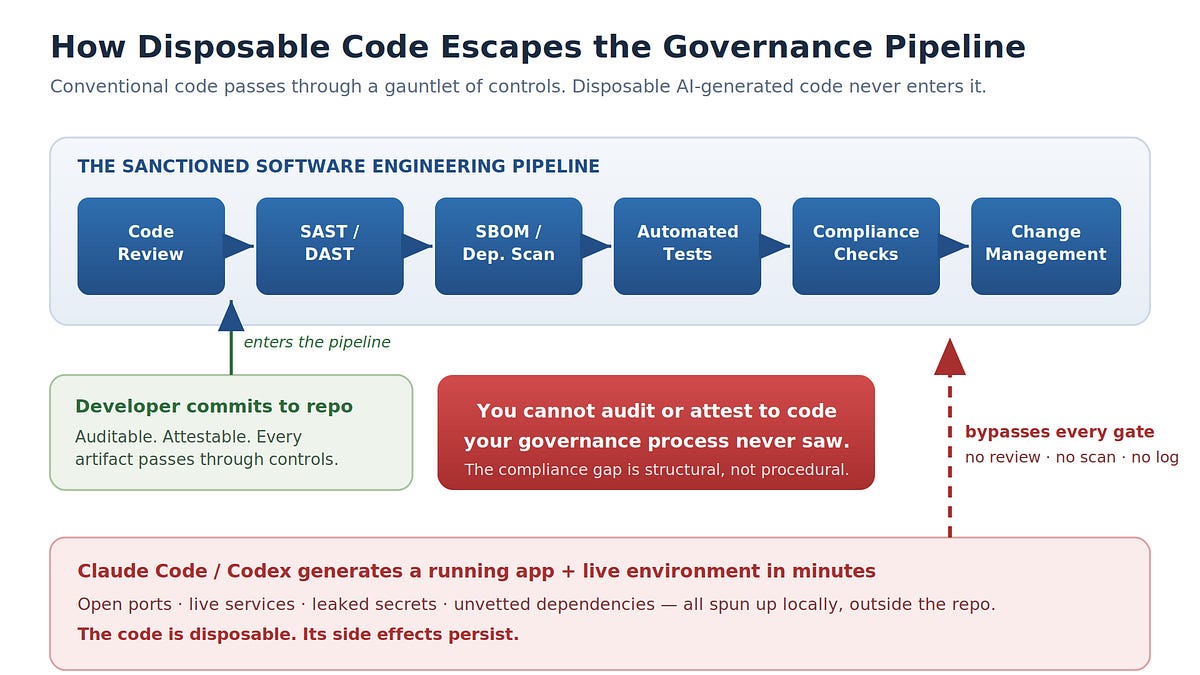
The Speed Trap: When AI-Generated Code Moves Faster Than Enterprise Security Can Follow
Agentic AI
AI coding agents can spin up full applications — servers, databases, open ports — in minutes, but the security infrastructure enterprises rely on was built for human-paced development cycles. The real danger isn't the code itself, which may be discarded quickly, but the durable side effects it leaves behind: exposed credentials, running services, and unvetted dependencies that persist long after the 'disposable' artifact is forgotten. This is the governance gap that no one's adequately solved yet, and it applies equally to design systems generating production UI at agent velocity.
In the Feed
Git Was Built for Humans. AI Agents Commit Code 22 Times Per Second.
AlphaSignal
Cursor's new Origin platform reveals how thoroughly AI agents have broken the assumptions underlying collaborative development infrastructure — 22+ commits per second demands automated conflict resolution at a scale GitHub was never architected to handle, and this is only the beginning of legacy tooling hitting its ceiling.

Typography as Foundation, Burnout as Symptom: Designing for the Long Haul
Design Better
A thoughtful framework for sustaining creative work over decades reframes burnout not as a rest problem but as a cross-training problem — drawing a direct analogy between physical endurance training and creative practice that offers a more durable model for design leadership than hustle culture's alternatives.

Vibecoding as a Design Tool: Where Prototyping Meets Agentic Workflow
Ruben Hassid
Plain-English app generation via Claude Code is becoming a legitimate part of the design-to-development handoff — not as a replacement for professional development, but as a way to generate clickable prototypes and bespoke workflow tools that previously required a developer dependency, which is a real shift in what a designer can own independently.
Quick Takes
Cursor building a git platform from scratch because GitHub can't handle AI agent commit velocity is the clearest signal yet that we're in an infrastructure replacement cycle, not just an upgrade cycle.
AlphaSignalThe fact that a city government released a model weight-merge as 'original AI research' and briefly got away with it says something uncomfortable about how little scrutiny most AI releases receive.
AlphaSignalAnthropic intentionally restricting access to its most capable model while safety infrastructure catches up is the kind of deliberate governance tradeoff the rest of the industry is still avoiding.
The Founders Corner →Vibecoding, agentic commits, and AI-generated UI are all converging on the same insight: the designer or engineer who can define constraints and governance at the system level will matter far more than the one who can execute individual artifacts faster.