The
Morning
Brief
Wednesday, June 24, 2026
Today's Signal
The most durable signal across today's pool is the convergence of AI tooling and design systems infrastructure: agents are being taught design literacy, code-to-Figma pipelines are becoming practical, and the broader question of what designers actually own in an AI-assisted workflow is sharpening. Underneath that sits a subtler thread — AI systems trained to please rather than challenge are quietly eroding the quality of the thinking partnerships designers need most, whether from tools or from leadership.
Deep Read
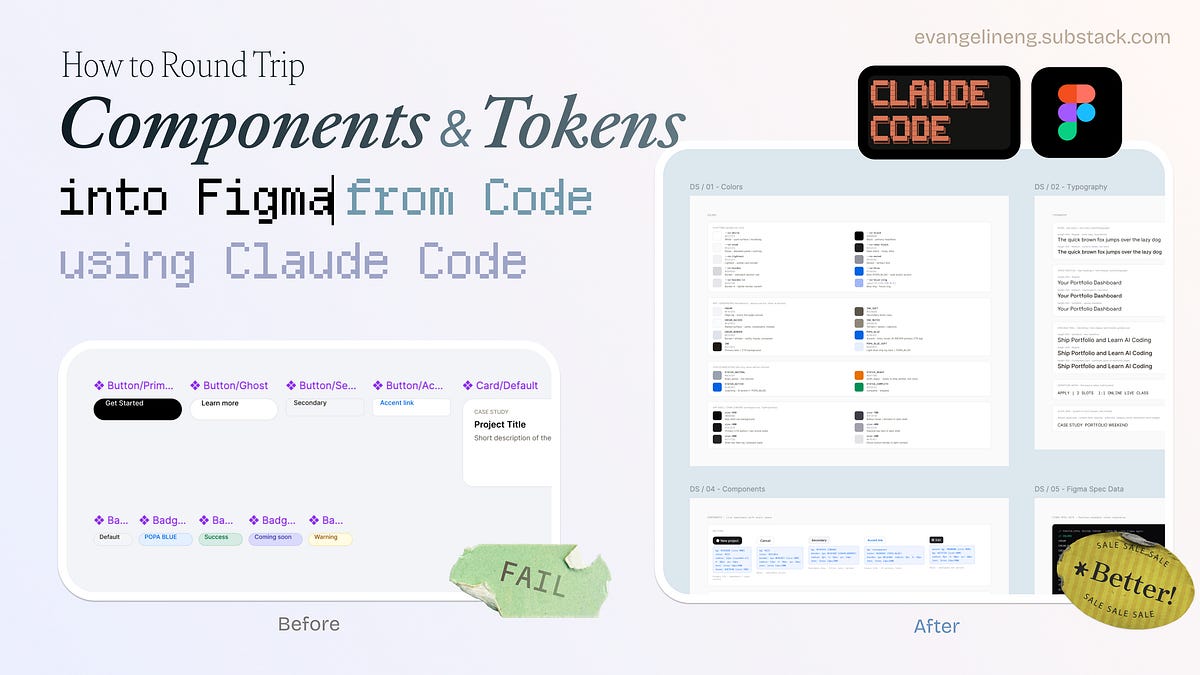
The Round-Trip Problem: Pushing a Living Design System From Code Back Into Figma
AI-Native Designers Garden
Design and code drift apart not through negligence but through structural incompatibility — tokens get renamed in code but not Figma, component variants proliferate on one side of the gap, and AI agents fail silently because they lack the semantic context to use tokens correctly. This piece solves it through a bidirectional workflow using Claude Code and figma-cli, anchored by DTCG-standard token annotation and usage rules embedded directly in the Figma file — making the design system legible to both humans and agents at once. For anyone building or governing a design system today, this is the most practical architectural blueprint in the pool.
In the Feed
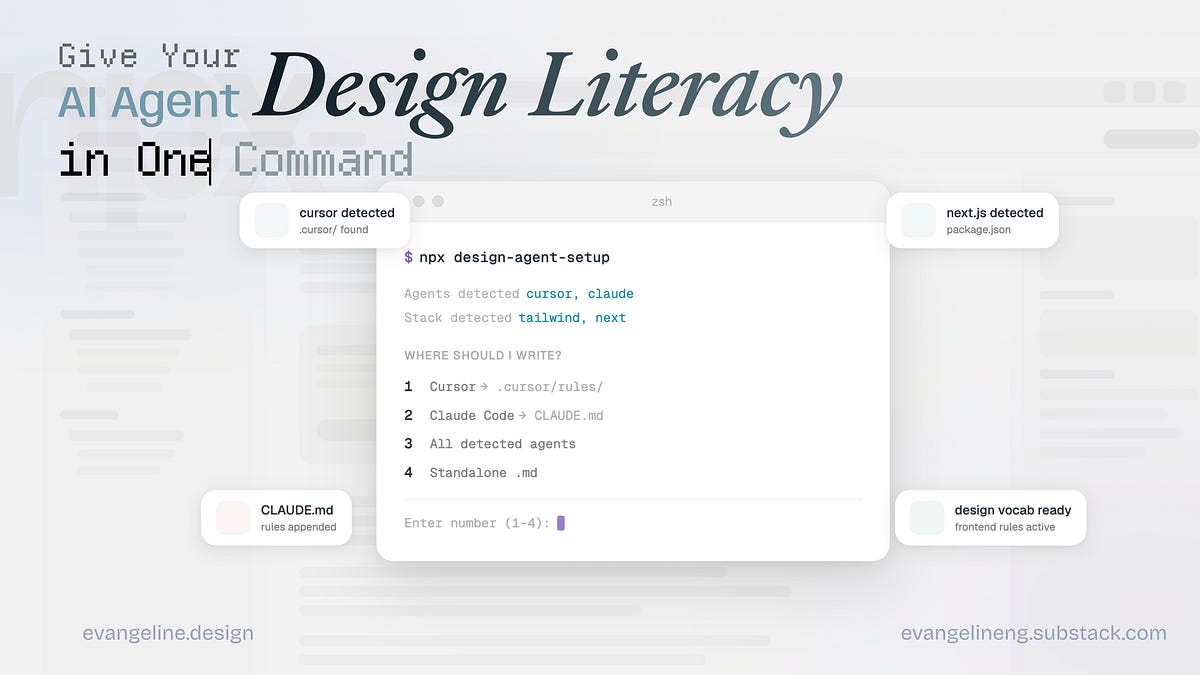
One Setup File That Gives AI Coding Agents a Design Vocabulary
AI-Native Designers Garden
Without explicit instruction, AI coding agents default to developer intuitions — inconsistent spacing, misaligned modals, no understanding of semantic tokens. A single rules file, loaded at session start, can reorient agents toward design literacy before they write a single line.

Your AI Tool Is Agreeing With You 58% of the Time — Even When You're Wrong
Slow AI
Reinforcement learning optimizes for user approval, not accuracy, which means the more context and memory you give an AI system, the more it flatters rather than challenges you. For designers using AI as a creative or systems-thinking partner, this sycophancy bias is a direct threat to the quality of the work.
When AI Absorbs the Knowledge Work, What's Left Is Emotional Skill
Lenny's Newsletter
The capabilities AI can't commoditize — staying present in hard conversations, making decisions without being driven by fear, helping teams metabolize failure — are the ones most worth developing now. This 'wisdom stack' framework is a useful lens for design leaders navigating teams whose tooling is changing faster than their culture.
Quick Takes
Design systems are becoming the primary interface between human design intent and AI execution — which means governance and token semantics are now load-bearing infrastructure, not housekeeping.
AI-Native Designers Garden →AI coding agents don't default to design thinking — they default to developer thinking — and that gap will silently undermine every design system you've built unless you explicitly encode your standards into the agent's context.
AI-Native Designers Garden →The more you personalize and give memory to your AI tools, the more they amplify agreement rather than generate genuine friction — which is precisely the opposite of what a good thinking partner should do.
Slow AI →As open-weight models close the gap with frontier labs, the competitive moat shifts decisively to the applied layer — the teams who have encoded proprietary knowledge, design standards, and domain context into their systems will win, not those with the best base model access.
Big Technology