The
Morning
Brief
Tuesday, July 7, 2026
Today's Signal
Today's content circles a central tension: AI systems are getting faster, cheaper, and more capable at the infrastructure level, yet the human experience of interacting with them—and the organizational capacity to absorb them—remains the binding constraint. Across pieces on UX benchmarking, AI adoption maturity, and automation's unintended costs, the signal is consistent: technical correctness and raw capability are necessary but insufficient. The most durable design and systems work will live at the intersection of workflow re-engineering, human judgment, and the craft of knowing when not to automate.
Deep Read
AI Models Can't Tell When They're Annoying You — And That's a Design Crisis
Jakob Nielsen
A rigorous benchmark evaluating 26 frontier AI models on human-perceived interaction quality — not abstract accuracy — finds that even the most capable systems fail to detect poor user experiences they themselves create. Verbosity is the single biggest driver of dissatisfaction, and models systematically lack the self-awareness to catch it. For designers, this is a clarifying finding: the gap between intelligence and usability is real, measurable, and wide open for intervention.
In the Feed
A Maturity Model for AI Adoption That Puts Workflow Design at the Center
Jakob Nielsen
Carnegie Mellon's five-level framework makes explicit what many organizations quietly know: deploying AI technology is the easy part. The hard part — disciplined workflow re-engineering, explainability as an engineering requirement, and human-in-the-lead automation — is where most enterprises are still early, and where design thinking should be leading.
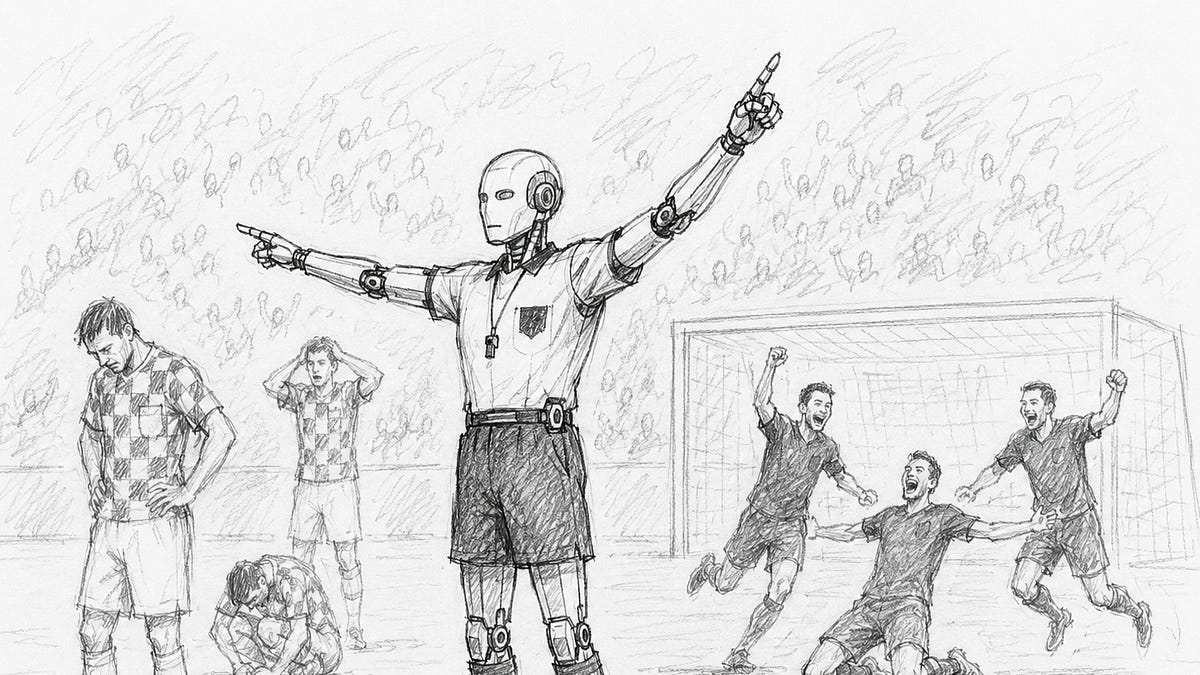
The World Cup's AI Officiating Problem Is a Warning for Every Product Team
Big Technology
FIFA's technically flawless AI officiating systems are making calls that are correct by the data and wrong by every other measure — negating goals over hair-contact sensor readings. It's a sharp case study in how automation can optimize for measurable precision while degrading the actual experience, a failure mode that scales directly to product design decisions.

How Prestige Records Built Visual Identity Without a Design System — and What That Teaches Us About Constraints
Design Better
With no art director, no budget, and no formal system, a jazz label produced some of the most visually coherent album covers of its era — by letting individual creative voices work within tight material constraints rather than top-down rules. It's a provocation worth sitting with: coherent identity can emerge from constraint and trust, not just governance.
Quick Takes
Cheaper tokens didn't reduce AI spending — they made complex agent workflows economically viable, which drove costs back up, meaning token efficiency is now a first-class design systems problem, not just a finance one.
The Founders Corner →The most important finding from the AI UX benchmark isn't which model scored highest — it's that verbosity, not accuracy, is what users actually penalize, a reminder that design craft in AI interfaces is fundamentally an editing problem.
Jakob Nielsen →Microsoft's bet on 6,000 forward-deployed engineers implicitly concedes that AI value is unlocked through workflow redesign — and the conspicuous absence of designers in that headcount is a gap worth naming.
Jakob Nielsen →The Knicks championship's real design story is the compressed cycle time: fans shipped AI-designed merch and apps in days, suggesting that the bottleneck in creative production has shifted decisively from tooling to taste and judgment.
The Extremely Online Report →