The
Morning
Brief
Friday, July 10, 2026
Today's Signal
Today's content circles a central tension: as AI systems grow more capable and autonomous—executing real-world transactions, running weeks-long tasks, handling complex agent orchestration—the design and systems thinking required to work with them well becomes more demanding, not less. Designers and builders alike are being asked to rethink foundational patterns, from interface disclosure logic to agent harness engineering, in ways that treat AI behavior as a design material rather than a black box. The clearest competitive moat isn't model capability but the quality of the systems, patterns, and craft layered around it.
Deep Read
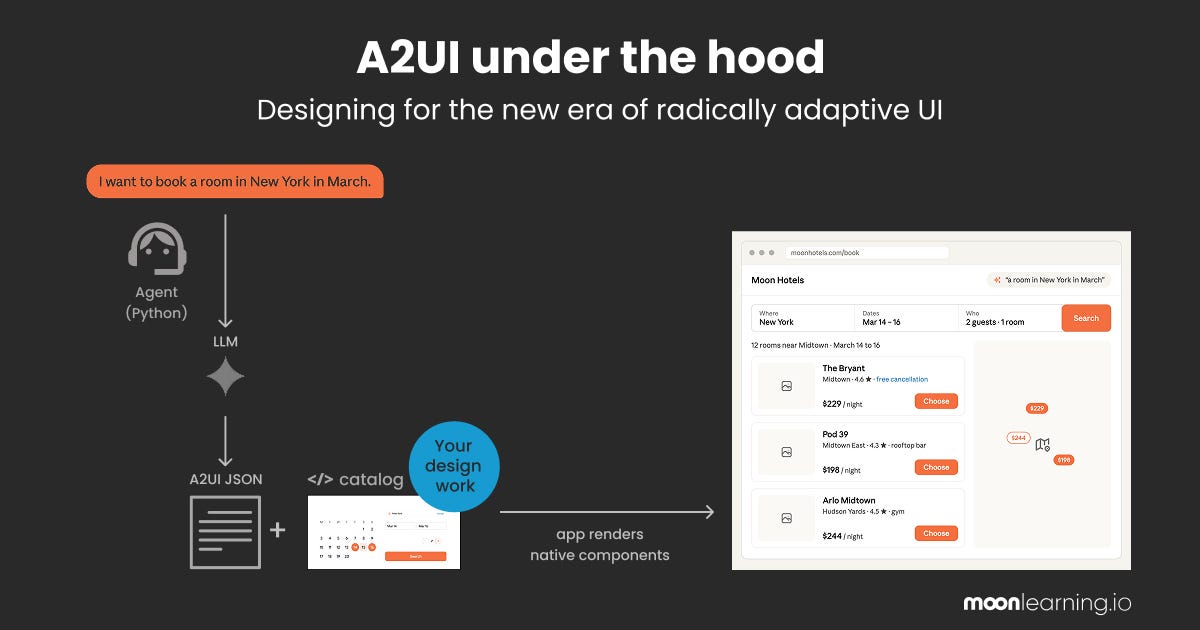
When UI Becomes a Living Thing: Designing for Radically Adaptive Interfaces
Christine Vallaure
Static interface design assumes predictable states—but AI-powered UI breaks that assumption entirely, making interface behavior dynamic, context-sensitive, and non-deterministic. This piece digs into what 'A2UI' (AI-adaptive UI) actually demands from designers: not just new interaction patterns, but a fundamentally different mental model where the interface is less a fixed artifact and more a responsive system. For designers who've built careers on component consistency and design token governance, this is the challenge that reframes everything.
In the Feed

Progressive Disclosure Scales to Week-Long AI Agents—And It's Never Been More Important
Jakob Nielsen
A 40-year-old interaction principle turns out to be exactly the right lens for designing AI agents that operate over extended time horizons—layering information and actions progressively across time, not just across screen space. As agents grow more complex, this pattern becomes less a UX nicety and more a core architectural requirement.
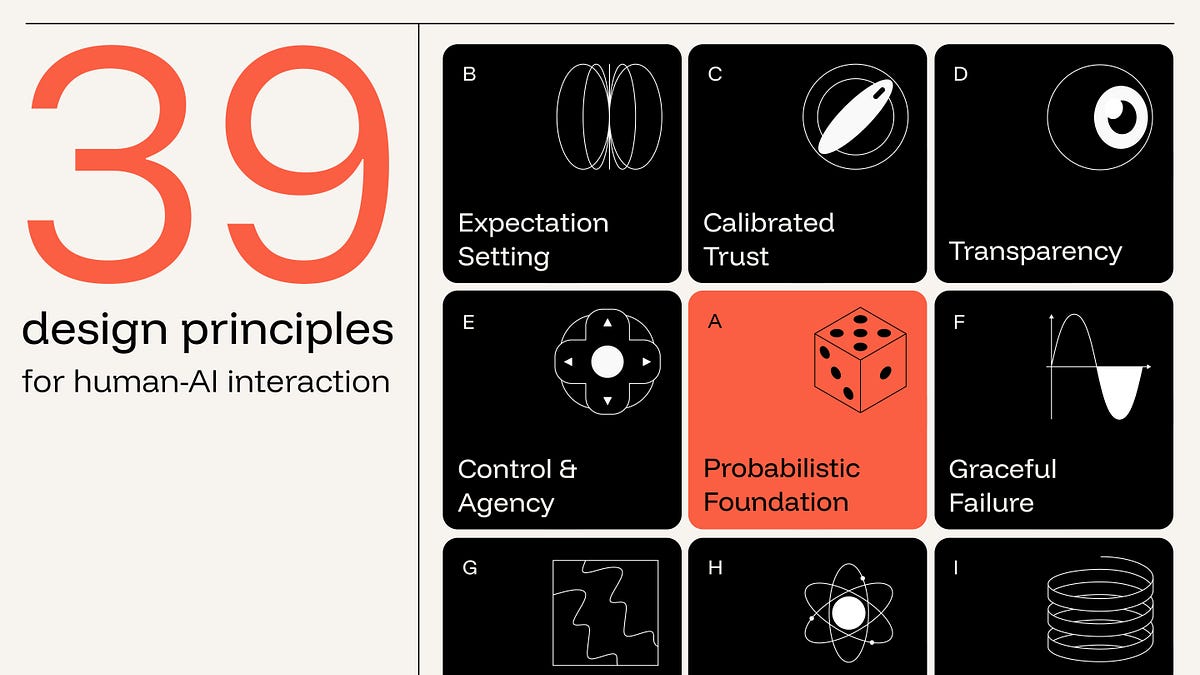
39 Principles for Designing Interactions With Systems That Can Surprise You
Syntax Stream
Traditional interface design principles assume behavioral predictability; AI-driven interfaces don't. This collection of 39 principles offers a practical design vocabulary for systems where outputs are probabilistic and states are loosely defined—a necessary toolkit for anyone designing AI-native products.

The Real Reason AI Coding Agents Work—or Don't—Has Nothing to Do With the Model
Agentic AI
Teams that get consistent results from AI coding agents aren't winning on prompting or model selection—they're winning on system design: specifications, guardrails, testing, and observability built around the model. The gap between 'AI works sometimes' and dependable AI-assisted workflows is a design and engineering systems problem, not a capability problem.
Quick Takes
Benchmark inflation is real: if 27–34% of SWE-Bench Pro tasks are broken or contradictory, the 'rapid progress' narrative in AI coding is measuring garbage, not capability.
AlphaSignalMeta's bet—that product experience and distribution, not frontier model leadership, will determine who wins in AI—is essentially an argument that design systems thinking scales all the way to AI strategy.
Big Technology →An AI agent selling an ebook autonomously on the open internet isn't a demo—it's a forcing function for every designer who hasn't yet thought seriously about what human oversight looks like in a world of week-long autonomous tasks.
AlphaSignalThe proliferation of AI-generated content 'slop' is not just a taste problem—it's a signal that most people are using AI at the lowest level of ambition, optimizing for quick output over meaningful impact.
Slow AI →