The
Morning
Brief
Thursday, November 19, 2026
Today's Signal
Today's content orbits a central tension: AI is rapidly absorbing execution work—coding, testing, research, even design—while the systems and trust frameworks needed to govern that autonomy are still being improvised. For designers and design systems practitioners specifically, the pressure point is clear: AI tools are accelerating the pipeline from description to implementation, making the design system itself the durable layer of craft and intent that machines can't simply generate away.
Deep Read

When AI Sells Outcomes, Not Tools, Measurement Becomes the New Design Problem
Jakob Nielsen
The shift from software licenses to outcome-based pricing—charging only when a defined unit of work completes—transfers performance risk from buyer to vendor, but it also makes the meter itself a critical design challenge. Honest measurement of what counts as 'done,' and how that's communicated to enterprise buyers, will determine trust and adoption more than raw capability. The economic parallels to utility adoption are real, but the design of fair service contracts is the unsolved UX problem hiding inside the business model.
In the Feed
Seamful Design: Why Hiding Every System Boundary Is Actually a Trust Problem
Jakob Nielsen
Selectively exposing system limits—coverage gaps, sync state, accuracy ceilings—lets users calibrate trust and plan around constraints, rather than being blindsided by failures. The principle has sharp relevance for AI-powered interfaces, where invisible boundaries erode confidence in the entire system.

AI Makes Scientists Faster but Safer — and That's a Problem Worth Naming
Jakob Nielsen
Heavy AI use in scientific research saves nearly 7 hours weekly, but adoption clusters around data processing and writing rather than ideation—the actual bottleneck for breakthroughs. Worse, AI appears to steer researchers toward lower-risk questions, raising a structural concern about whether productivity gains come at the cost of ambition.
AI Agents as Design Collaborators: Finding the Right Library Before Building From Scratch
Substack
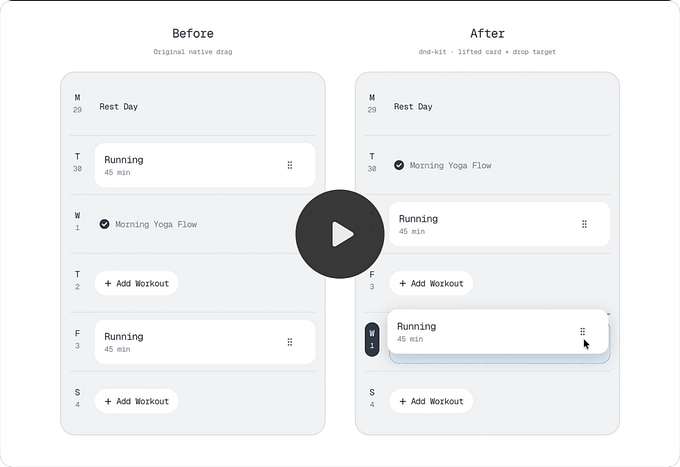
Rather than generating UI interactions wholesale, a more durable technique prompts AI agents to discover, evaluate, and integrate existing libraries—accounting for accessibility, touch support, and design system fit. It reframes the agent's role from creator to informed assembler, which better preserves system coherence.
Quick Takes
Claude Code can now test foldable iPhone layouts by literally folding and unfolding a simulator in chat—the gap between describing a layout and verifying it is closing to near zero.
AlphaSignalConsistency across pages isn't a stylistic preference—it's cognitive load management, and every unmotivated redesign mid-flow taxes user attention that should be spent on content.
Jakob NielsenSecurity timeouts that discard unsaved work are a design failure dressed as a security feature—the fix is separating credential expiry from content preservation, not punishing users for working deeply.
Jakob Nielsen →AI is rapidly taking over the execution layer of creative and knowledge work, which means the design system—as structured intent, not just pixels—is becoming the most defensible artifact a design org can produce.